







Our Neighborhood
Site Title
Earth


Keeping It Green

(There's No Vaccine to Fight Climate Change)

Back Arrow

World Climate Change Opinion-2022
Climate Change Map
Climate Change Jargon Buster
Climate Change Apparel
Floating Cities

Climate Change

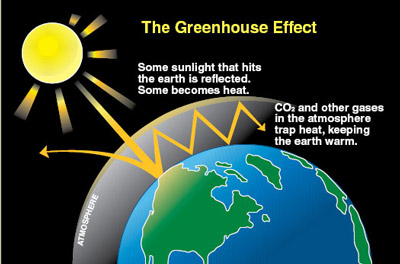
Greenhouse Effect Image

Recent News Of Interest

Site Map
Magnifying Glass


Page Updated:
Dec. 18, 2025


How Risky is Your
Country From Climate Change?

Climate Crisis Essay
Bloomberg Green - Seattle
Al Gore's Climate Reality Project
Billion $ Weather/Climate Disasters Map
Event: Bloomberg Green - Seattle

  • How Hot is Your Town?
  • Documentaries to See
  • The Greenhouse Effect
  • The Hot 10 Climte Songs
  • Planet A:
    Climate Change YouTube Channel
  • • The Causes & Consequences

    • The Approaches            • Resources

    • Insights From Climate Science

    •  Easily Understood CC Presentation

    • CNN’s Exceptional Climate Journalism
    • The Flight For Their Lives
    • Where You Stand Survey
    • Show it With Colors
    • Visit NYC's Climate Museum
    • A Climate Crisis Haiku
    • Sea Level Rise Viewer
    • Your City's CC Future


    Climate Change / Global Warming News Stories Published in the Last Month

    (Latest Dates First)
    • • WA Weather: River Waters Recede
      Flood Warnings Remain

      “SeattleTimes

      Dec.18, 2025 -Most Western Washington rivers that swelled over the past two weeks have crested or will crest Thursday, though a flood watch remains in effect for Seattle and the south Puget Sound region through Friday afternoon.

      Meanwhile, the Seattle area will see another round of gusty winds and rain, with snow in the Cascade Mountains and freezing rain in the mountain passes.

    • • Concrete Washington Faces Weather Whammy
      Floods, Slides, Wind, Blizzard Warning

      “SeattleTimes

      Dec.18, 2025 -Longtime residents of Concrete and neighboring towns along the Skagit River are no strangers to heavy rain, flooding, wind and landslides.

      However, all four within the last week — along with multiple minor earthquakes, evacuation orders and a blizzard warning — is a different story, Concrete librarian Cody Johansen said.

    • • The Arctic Is in Dire Straits, 20 Years of Reporting Show
      The Arctic Has Changed Dramatically in the Past 20 Years, As Temperatures Skyrocket and Ice Rapidly Melts

      “Scientific

      Dec. 17, 2025 -The Arctic is a dramatically different place than it was 20 years ago, when scientists first began giving it an annual checkup—and its current state is dire.

      The first Arctic Report Card was released by the National Oceanic and Atmospheric Administration in 2006. Since then the region has warmed twice as fast as the global average. About 95 percent of the oldest, thickest sea ice is gone—the sliver that remains is collected in an area north of Greenland. Even the central Arctic Ocean is becoming warmer and saltier, causing more ice melt and changing how much heat is released into the atmosphere in a way that affects weather patterns around the world.

    • • Blizzard On the Way For WA After Floods
      Highway 2 Could Be Closed Months

      “SeattleTimes

      Dec. 16, 2025 -Another active weather system will move through Western Washington Tuesday, with rain and high gusts in the Seattle area and multiple feet of snow in the Cascade Mountains, according to the National Weather Service. Here's what to expect.

      National Guard members will help secure the levee breach with sandbags in Pacific along the White River.

    • • King County Dams Are Holding
      ‘They Are Not In Danger of Failure’

      “SeattleTimes

      Dec. 16, 2025 -Two major dams in King County have done their jobs to protect Western Washington and remained stable Wednesday, despite an intense series of atmospheric river events that breached levees, swallowed roads and forced evacuations.

      Seattle-based U.S. Army Corps of Engineers spokesperson Shelia Fourman said both the Howard A. Hanson Dam, 35 miles east of Tacoma, and the Mud Mountain Dam, southeast of Enumclaw, are “currently operating as designed.”

    • • Arctic Warming Is Turning Alaska’s
      Rivers Red With Toxic Runoff
      A Warmer, Rainier Arctic and 200 Alaskan Rivers “Rusting” As Melting Tundra Leaches Minerals From the Soil Into Waterways

      NYT

      Dec. 16, 2025 -Record-setting temperatures and rainfall in the Arctic over the past year sped up the melting of permafrost and washed toxic minerals into more than 200 rivers across northern Alaska, threatening vital salmon runs, according to a report card issued by federal scientists.

      The report, compiled by dozens of academic and government scientists and coordinated by the National Oceanic and Atmospheric Administration, documented rapid environmental changes from Norway’s Svalbard Island to the Greenland ice sheet and the tundra of northern Canada and Alaska.

    • • ‘Life Threatening’ Flood Possible Near Tukwila
      As Green River Levee Fails

      “SeattleTimes

      Dec.13, National Weather Service’s Seattle office has issued a flash flood warning shortly before noon Monday for areas near Tukwila along the Green River levee.

      King County Dispatch is reporting a levee failure, which could create “life threatening flash flooding” on the east side of the levee, NWS Seattle said in its warning. The flood warning covers the area of more than 46,000 residents.

    • • Death Toll From Bolivia Floods Rises to 20
      At Least Two Dozen Missing

      REUTERS

      Dec. 15, 2025 -The death toll in Bolivia from floods triggered by an overflowing river in the eastern Santa Cruz region has climbed to 20 and is expected to rise as rescue teams reach previously inaccessible areas, Deputy Civil Defense Minister Alfredo Troche said on Monday.

      Authorities said at least two dozen people remain missing and hundreds of families have been left without shelter following days of intense rainfall.

    • • After WA Floods, Residents Scramble For Help
      And Insurance to Cover Costs

      “SeattleTimes

      Dec. 14, 2025 -The Rosas family clung to one another Thursday as the Monroe mobile home they moved into just a few months ago submerged in floodwater.

      José Rosas, 39, said the home was supposed to save his family money while they struggled to pay for his wife’s breast cancer treatment. Now, with no flood insurance, it’s their next financial blow.

    • • Washington State Floods
      Auburn Evacuation Order Issued For Some Homes

      “SeattleTimes

      Dec. 14, 2025 -Auburn city officials issued Level 3 evacuation orders late Saturday night for some homes and businesses as the Green River swelled, continuing this week’s catastrophic floods in Washington.

      The order reflects the highest level of evacuation guidance, instructing people to “go now.”

    • • Burlington Residents Told to Evacuate As Homes Start Flooding
      Skagit County officials Were Urging Burlington Residents to Evacuate Their Homes Early Friday As a Slough From the Skagit River Started Flooding Homes

      “SeattleTimes

      Dec. 12, 2025 - Evacuations for Skagit County began Wednesday. All of the 100-year flood plain, the main population center for the county that includes much of Burlington, was already set to a Level 3 evacuation order, meaning “GO NOW.”

      As of Friday morning, that evacuation order was still in effect. Skagit County said in an alert that National Guard members were going door-to-door Friday in Burlington to help people evacuate.

    • • How Western Washington’s ‘100-Year’ Floods Are Changing
      For Communities In Skagit and Whatcom Counties, Flooding Is a Part of Life

      “SeattleTimes

      Dec. 11, 2025 This week’s flooding is likely to match or be worse than the flooding in 2021 that caused significant damage, especially along the U.S.-Canada border.

      Nearly 5 trillion gallons of rain have soaked Washington in the past seven days, triggering evacuations and rescues.

      Flooding is a natural part of how rivers function, but climate change is going to make things worse, threatening communities along rivers and in floodplains.

    • • A Retreating Kashmir Glacier Is Creating
      An Entire New World In Its Wake
      ‘Even the Animals Seem Confused’:

      TGL

      Dec. 11, 2025 -From the slopes above Pahalgam, the Kolahoi glacier is visible as a thinning, rumpled ribbon of ice stretching across the western Himalayas. Once a vast white artery feeding rivers, fields and forests, it is now retreating steadily, leaving bare rock, crevassed ice and newly exposed alpine meadows.

      The glacier’s meltwater has sustained paddy fields, apple orchards, saffron fields and grazing pastures for centuries. Now, as its ice diminishes, the entire web of life it supported is shifting.

    • • Climate Crisis Supercharged Deadly Monsoon Floods in Asia
      Cyclones Like Those in Indonesia, Sri Lanka and Malaysia That Killed 1,750 Are ‘Alarming New Reality’

      TGL

      Dec. 10, 2025 -The climate crisis supercharged the deadly storms that killed more than 1,750 people in Asia by making downpours more intense and flooding worse, scientists have reported. Monsoon rains often bring some flooding but the scientists were clear: this was “not normal”.

      In Sri Lanka, some floods reached the second floor of buildings, while in Sumatra, in Indonesia, the floods were worsened by the destruction of forests, which in the past slowed rainwater running off hillsides.

    • • Mount Vernon Floodwall Holding As Record Crest Passes
      WA Flooding Prompts Road Closures, Burlington Evacuation

      “SeattleTimes

      Dec. 3, 2025 - Mount Vernon’s emergency floodwall held fast Thursday night and into Friday morning as the rushing and debris-filled Skagit River swelled to record levels, forcing the evacuation of thousands throughout the city’s low-lying areas.

      Around 1 a.m., the Skagit rose to a record 37.7 feet in Mount Vernon, just over the previous high-water mark of 37.4 feet, set in 1990, a U.S. Geological Survey river gauge shows.

    • • Europe Agrees to Cut
      Emissions 90% By 2040
      European Member States Have Agreed On a Legally Binding Climate Target to Cut Emissions 90% By 2040

      {CNBC}

      Dec. 10, 2025 -The European Union has agreed to a legally binding climate target to cut emissions 90% by 2040, even as it pushes back a planned critical emissions trading scheme.

      The European Parliament and EU Member States came to a provisional agreement on the target and an amendment of the EU Climate Law on Tuesday night.

    • • A Radical Climate Proposal Aims to Channel
      Seawater Into a Giant Egyptian Desert
      Flooding Egypt’s Vast Qattara Depression With Seawater Could Slightly Lower Global Sea Levels and Reshape Climate Adaptation

      ZME

      Dec. 9, 2025 -Sea levels are rising, threatening coastal areas, including cities, around the world. Due to climate change, the global ocean has already risen by 21-24 centimeters (about 8-9.5 inches) since 1880, and the rate is accelerating, according to the U.S. National Oceanic and Atmospheric Administration (NOAA). A new climate idea aims to slow this rise by moving seawater to reflood inland depressions.

      The main causes of sea level rise are ice packs melting and the volume of water in the ocean expanding as Earth’s temperature increases due to human-caused climate change. Depending on the ferocity with which we cut greenhouse gas emissions, predictions of future sea level rise vary widely. According to NOAA, if we cap the global temperature rise at just 1.5° Celsius (2.7° Fahrenheit) above pre-industrial levels — nearly impossible at this point — the sea level would rise an additional 30 cm (12 in) by 2100. If emissions remain at the very high end of estimates, sea levels could rise by 200 cm (6.6 feet) by the end of the century, flooding many of the world’s coastlines and affecting tens of millions of people. There are even worse scenarios: if we lose much of Greenland’s ice sheet or the Thwaites Glacier in Antarctica — dubbed the Doomsday Glacier — the resultant rise in water level could affect billions.

    • • Caribbean Reefs Have Lost 48% of Hard Coral Since 1980
      ‘Destructive’ Marine Heatwaves Driving Loss of Microalgae That Feed Coral

      TGL

      Dec. 9, 2025 -Caribbean reefs have half as much hard coral now as they did in 1980, a study has found.

      The 48% decrease in coral cover has been driven by climate breakdown, specifically marine heatwaves. They affect the microalgae that feed coral, making them toxic and forcing the coral to expel them.

    • • ‘Food and Fossil Fuel Production Causing
      $5bn of Environmental Damage An Hour’
      UN GEO Report Says Ending This Harm Key to Global Transformation Required ‘Before Collapse Becomes Inevitable’

      TGL

      Dec. 9, 2025 - The unsustainable production of food and fossil fuels causes $5bn (£3.8bn) of environmental damage per hour, according to a major UN report.

      Ending this harm was a key part of the global transformation of governance, economics and finance required “before collapse becomes inevitable”, the experts said.

      The Global Environment Outlook (GEO) report, which is produced by 200 researchers for the UN Environment Programme, said the climate crisis, destruction of nature and pollution could no longer be seen as simply environmental crises.

    • • This Arkansas City Shows How to Slash
      Emissions and Save Money, Too
      In the Ozarks, the Growing College Town of Fayetteville, Ark., Is Using Clean Energy to Power City Facilities and Embracing Nature-Based Solutions to Climate Threats

      NYT

      Dec. 9, 2025 - Fayetteville, Ark., has proudly worn colorful descriptors over the years.

      Crunchy. Funky. “Kind of a granola, hippie environment,” said Jeff Pummill, who chairs the city’s environmental action committee.

      Set in the Ozark Mountains in the northwest corner of the state, a region of lush, rolling hills crisscrossed by rivers and creeks, Fayetteville drew back-to-the-land enthusiasts in the 1960s. It’s a city where, 25 years ago, a 53-year-old grandmother tried unsuccessfully to stop mature oaks from being razed for a retail development by taking up residence in a tree for a few weeks.

    • • Storm Hits Washington State Hard
      Cities Brace For ‘Double Crest’ of Record Floods

      “SeattleTimes

      Dec. 8, 2025 - The opening salvo of a major atmospheric river hit the Pacific Northwest on Monday, drenching much of Western Washington with heavy rain that is forecast to continue at least until Thursday.

      The National Weather Service warned of a high risk of widespread and significant river flooding.

    • • 2025 ‘Virtually Certain’ to Be Second- Or
      Third-Hottest Year On Record, EU Data Shows
      Copernicus Deputy Director Says Three-Year Average For 2023 to 2025 On Track to Exceed 1.5C of Heating For First Time

      TGL

      Dec. 8, 2025 - This year is “virtually certain” to end as the second- or third-hottest year on record, EU scientists have found, as climate breakdown continues to push the planet away from the stable conditions in which humanity evolved.

      Global temperatures from January to November were on average 1.48C higher than preindustrial levels, according to the Copernicus, the EU’s earth observation programme. It found the anomalies were so far identical to those recorded in 2023, which is the second-hottest year on record after 2024.

    • • Major Flood Forecast Worsens For Western WA Rivers
      Flooding and Landslide Risks Are Possible

      “SeattleTimes

      Dec, 7, 2025 - An atmospheric river is barreling towards Western Washington, bringing a risk of major river flooding and landslides in an especially soggy week, according to the National Weather Service.

      The rainfall will come in hot on Monday, gradually tapering off Tuesday before picking up again Wednesday, said Logan Howard, a meteorologist at the National Weather Service. Forecasters anticipate 2 to 3 inches of rain from Monday to Wednesday in Seattle.

    • • Dodging Icebergs and Storms on the Hunt for an Ocean Tipping Point
      Scientists Fear Warming Is Driving a Collapse In the Ocean Currents That Shape Climate Far and Wide

      NYT

      Dec. 6, 2025 - From the deck of a ship off eastern Greenland, the most majestic presence isn’t the whales, the icebergs or even the towering, glacier-wrapped mountains.

      It’s the parade of frigid, midnight-blue water, 75 miles wide, that streams down the coast from the Arctic Ocean. Farther south, these currents mingle with tropical water swinging up through the Gulf Stream, and together they set ocean temperatures throughout the North Atlantic, like hot and cold taps on a giant bath.

    • • An Alaskan Village Confronts Its Changing Climate
      Rebuild or Relocate?

      NYT

      Dec. 5, 2025 - From the beige confines of Room 207 at the Aspen Suites Hotel on the outskirts of Anchorage, Maggie Paul and her daughter, Jamie, struggle to envision the future.

      A little more than a month ago, the women were evacuated along with about 1,000 others from Kipnuk, their remote coastal village in western Alaska that was destroyed by the remnants of a typhoon. They were airlifted to safety; there are no roads to their community. Many landed in hotels about 500 miles away in Anchorage, which might as well be a different planet for all the ways the city differs from their tight-knit rural community.

    • • New Report Warns of Critical Climate Risks in Arab Region
      Foundations of Daily Life, Including Farms, Reservoirs and Aquifers That Feed and Sustain Millions, Are Being Pushed to the Brink By Human-Caused Warming

      ICN

      Dec. 4, 2025 - As global warming accelerates, about 480 million people in North Africa and the Arabian Peninsula face intensifying and in some places unsurvivable heat, as well as drought, famine and the risk of mass displacement, the World Meteorological Organization warned Thursday.

      The 22 Arab region countries covered in the WMO’s new State of the Climate report produce about a quarter of the world’s oil, yet directly account for only 5 to 7 percent of global greenhouse gas emissions from their own territories. The climate paradox positions the region as both a linchpin of the global fossil-fuel economy and one of the most vulnerable geographic areas.

    • • African Forests Have Officially Flipped
      Instead of Absorbing Carbon, They’re Now Releasing It

      ZME

      Dec, 3, 2025 -For decades, we’ve relied on the world’s tropical forests to do the heavy lifting in the fight against climate change. We assumed that the vast greenery of Africa was soaking up our excess carbon dioxide. But a new study in Scientific Reports suggests that safety net has snapped.

      A new study in Scientific Reports finds that in recent years, the continent’s forests changed from a carbon sink to a carbon source, releasing more CO2 than it absorbs.

    • • Devastating Floods Swamp Parts of Asia
      Here Are Images of the Chaos

      NYT

      Dec, 2, 2025 -A cascade of unusually destructive storms has torn through South and Southeast Asia, killing at least 1,200 people — a toll that is likely to rise — and displacing millions more.

      The region is no stranger to such giant storms, referred to as cyclones, hurricanes or typhoons, which tend to accompany monsoon rains in November and December. But this year’s sequence has been especially devastating.

    • • Reckoning With a New Era of Deadly Floods
      The Floods and Landslides That Have Killed More Than 1,350 People In Recent Weeks Are a Grim Reminder of the Risks of a Warming Planet

      NYT

      Dec. 2, 2025 - Our warming world has many ways of inflicting damage. Heat is a killer. Storms are getting more intense. And right now, floods are wreaking havoc across parts of Asia.

      Floods have killed more than 1,350 people in Indonesia, Sri Lanka, Thailand and Vietnam in recent weeks. Hundreds more are missing and millions have been displaced.

    • • When Earth Got 6°C Hotter 56 Millions Years
      Ago Plants Stopped Absorbing Carbon Properly
      Scientists Say It Could Happen Again

      ZME

      Dec, 2, 2025 -Around 56 million years ago, Earth suddenly got much hotter. Over about 5,000 years, the amount of carbon in the atmosphere drastically increased and global temperatures shot up by some 6°C.

      As we show in new research published in Nature Communications, one consequence was that many of the world’s plants could no longer thrive. As a result, they soaked up less carbon from the atmosphere, which may have contributed to another interesting thing about this prehistoric planetary heatwave: it lasted more than 100,000 years.


    Back Arrow

    • • The Philippines Spent Big on Flood Control
      But the Water Keeps Rising

      NYT

      Dec, 2, 2025 -Cynthia Colindres remembers her low-lying village flooding every two or three years when she was growing up, a fact of life in the typhoon-plagued Philippines.

      Nowadays, she said, it happens two or three times a year.

      So she was stunned when the Philippine government said recently it had spent tens of millions of dollars on flood-control projects in her native province, Bulacan, in recent years.

    • • Private Companies Have Raised Millions to Block the Sun
      What Could Go Wrong?

      WAPO

      Dec, 2, 2025 -For as little as $1, you can dim the sun — just a tiny bit — to save the world from climate change.

      At least, that’s the promise sold by a California start-up called Make Sunsets. Your dollar will pay for founder Luke Iseman to drive a Winnebago RV into the hills half an hour outside Saratoga, California, to release a balloon loaded with sulfur dioxide, an air pollutant normally spewed by volcanic eruptions. He and his 1,000 paying customers hope the balloon will burst in the stratosphere, releasing particles that will block sunlight and cool the planet.

    • • An Intense Monsoon Season Is Battering Parts of Asia
      Here’s What We Know

      NYT

      Dec, 2, 2025 -Three cyclones happened simultaneously across South and Southeast Asia this week, the latest of several huge storms that have battered the region, killing at least 1,350 people, with hundreds more still missing and millions displaced.

      Since the start of this year, there have been at least 16 cyclones and dozens of depressions in the Pacific and Indian oceans. Even moderate cyclones now produce extreme rainfall and can cause widespread flooding, said Roxy Mathew Koll, a climate scientist at the Indian Institute of Tropical Meteorology.

    • • What the Rio Grande’s More Frequent Dry-Outs
      Mean for the Region’s Animals and Ecosystems
      The Stretch of the River Through Albuquerque Has Run Dry Twice Since 2022

      ICN

      Dec. 2, 2025 - On a late July morning, a snapping turtle, about 18 inches in length, sat solemnly in a dry riverbed where the Rio Grande normally flows here. The aquatic reptile was one of few signs of life on a river that’s usually buzzing with various species of fish, ducks, insects and other animals.

      Fast forward to one crisp day in mid-October, and muddy-hued water, typical for this stretch of the Rio Grande, once again flowed downstream past Albuquerque’s Old Town area. Ducks swam near a sandbar, and things seemed more or less back to normal after several weeks of replenishing rains in the region. But with the river repeatedly running dry in recent years after decades in which it rarely did, it’s clear that the megadrought plaguing the Southwest will present new challenges to the river and the life that depends on it.

    • • Sri Lanka ‘a Disaster Zone,’ as Cyclone Deaths Surpass 350
      The Nationwide Flooding After the Storm Hit Last Week Was the Most Challenging Natural Disaster in the Island Nation’s History

      NYT

      Dec, 1, 2025 -Sri Lanka’s recent history has been riddled with serious setbacks. But President Anura Kumara Dissanayake has declared that the cyclone that hit the country last week is the “largest and most challenging natural disaster in our history.”

      In 2004, as the island nation of 22 million was trying to wind down a decades-long civil war, the Indian Ocean tsunami killed tens of thousands and caused billions of dollars in damages. In recent years, Sri Lanka has faced terrorist attacks, the Covid pandemic, and a man-made economic collapse that saw food and fuel supplies dry up.

    • • Climate Change Is Already Costing
      U.S. Households Up to $900 Per Year
      A New Working Paper From a Trio of Eminent Economists Tallies the Effects of Warming

      {HEATMAP}

      Dec. 1, 2025 -ttempts to quantify the costs of climate change often end up as philosophical exercises in forecasting and quantifying the future. Such projects involve (at least) two difficult tasks: establishing what is the current climate “pathway” we’re on, which means projecting hard-to-predict phenomena such as future policy actions and potential climate system feedbacks; and then deciding how to value the wellbeing of those people who will be born in the decades — or centuries — to come versus those who are alive today.

      But what about the climate impacts we’re paying for right now? That’s the question explored in a working paper by former Treasury Department officials Kimberley Clausing, an economist at the University of California, Los Angeles, and Catherine Wolfram, an economist at the Massachusetts Institute of Technology, along with Wolfram’s MIT colleague Christopher Knittel.

    • • Southeast Asia Storm Deaths Near 800 as Scale of Disaster Revealed
      Death Toll Rises to 604 in Indonesia, 176 in Thailand

      REUTERS

      Dec. 1, 2025 -The death toll from cyclone-induced floods and landslides in Indonesia passed 600 on Monday as rescuers battled to clear roads and improved weather conditions revealed the scale of a disaster that has killed nearly 800 people in Southeast Asia.

      Indonesia, Malaysia and Thailand have suffered devastation after a rare tropical storm formed in the Malacca Strait unleashed torrential rains and wind gusts for a week that hampered efforts to reach people stranded by mudslides and high floodwaters.

    • • Water Shortages Could Derail UK’s
      Net Zero Plans, Study Finds
      British Research Finds There May Not Be Enough Water For Planned Carbon Capture and Hydrogen Projects

      TGL

      Dec. 1, 2025 - Tensions are growing between the government, the water sector and its regulators over the management of England’s water supplies, as the Environment Agency warns of a potential widespread drought next year.

      Research commissioned by a water retailer has found water scarcity could hamper the UK’s ability to reach its net zero targets, and that industrial growth could push some areas of the country into water shortages.

    • • Indonesia Flood Death Toll Climbs
      to 303 Amid Cyclone Devastation
      As Reprted By the Disaster Agency

      REUTERS

      Nov. 29, 2025 - The death toll from floods and landslides following cyclonic rains in the Indonesian island of Sumatra has risen to 303, the head of the country's disaster mitigation agency said on Saturday, up from a previous figure of 174 dead.

      Large parts of Indonesia, Malaysia and Thailand have been stricken by cyclone-fuelled torrential rain for a week, with a rare tropical storm forming in the Malacca Strait.

    • • The Disaster to Come: New York’s Next Superstorm
      What Rain Can Do In New York City

      NYT

      Nov. 25, 2025 - The largest city in the country is mostly a cluster of islands. Its inlets and rivers rise and fall with the tides.

      When a hurricane pushes the ocean ashore, it produces a storm surge, an abnormal rise of water that creates deadly flooding. This is what happened in New York during Sandy. As climate change causes sea level rise, storm surges, which can travel upstream through the city’s tidal rivers, will become more dangerous.

    • • Hurricane Melissa’s 252-MPH Gust Sets New Wind Record
      It Raged as a Category 5 Storm In the Caribbean Last Month—and Now Scientists Have Confirmed That Its Strongest Gusts Neared Record Speeds

      “Scientific

      Nov. 24, 2025 -Hurricane Melissa was already one of the most powerful hurricanes ever recorded in the Atlantic Ocean—and now scientists have confirmed a new way it neared superlative status.

      Newly released data show that Hurricane Melissa produced a wind gust of 252 miles per hour—just 1 mph shy of the fastest wind gust ever measured on Earth, according to the World Meteorological Organization, and 4 mph faster than the most powerful gust ever measured in a tropical cyclone at sea.

    • • Vietnam’s Year of Floods, Mud and Death
      Scientists Suggested That Climate Change Could Make Central Vietnam a Global Hot Spot For Destructive Storms

      NYT

      Nov. 24, 2025 - Central Vietnam has become the latest epicenter of a deadly rainy season in Asia that has been supercharged by climate change, and seems to drag on without end.

      More than 90 people in the nation have been killed in the past week from flooding and landslides, and around a dozen more are missing, government officials reported Sunday.

    • • UK Wildfires Devastated More Areas In
      2025 Than At Any Time Since Records Began
      Firefighters Call For Long-Term Investment and Say UK is Dangerously Underprepared As Climate Crisis Worsens

      TGL

      Nov, 24, 2025 -Wildfires have devastated more moorland, forests and fields in the UK this year than at any time since records began, putting huge pressure on the country’s fire service, figures show.

      The Global Wildfire Information System estimates that by November, wildfires had burned 47,026 hectares (116,204 acres) in 2025 in the UK – the largest area in any year since monitoring began in 2012, and more than double the area burned in the record-breaking summer of 2022.

    • • What Climate Change Means For Your Thanksgiving Dinner
      Climate Change is Leading to More Irregularity When It Comes to Seasonal Weather Patterns, Which Can Impact the Growing Cycle For a Number of Crops

      {TIME}

      Nov. 24, 2025 -For people around the U.S., Thanksgiving is a chance to enjoy the best an autumn harvest has to offer—from sweet potatoes and pumpkin to turkey and green beans.

      But as higher temperatures impact growing seasons and extreme weather events wipe out crops, farmers across the country are facing mounting challenges when it comes to growing produce and raising livestock.

    • • Texas Workers Keep Dying in the Heat
      Texas Has No Labor Protections For Heat. That Leaves Workers, Especially Immigrants, Vulnerable On the Job.

      ICN

      Nov. 24, 2025 -Eighteen-year-old Danny Nolasco spent the day of July 15, 2024, mixing and hauling buckets of cement at a construction site in stifling heat.

      The neighborhood of sprawling four- and five-bedroom houses, west of the Austin suburb of Bee Cave, was worlds away from the small mountain town in Honduras where Nolasco grew up. He had come to Texas two years earlier, hoping for a better life, and was working in his free time while attending school.

    • • Violent ‘Storms’ Hidden Under Antarctica’s
      Ice Could Be Speeding Its Decline
      When Ice Freezes and Melts, It Creates Vortices That Drag Warmer Waters From the Depths to the Surface, Where They Eat Away At the Continent's Rapidly Degrading Ice Shelves

      Grist

      Nov. 21, 2025 -The West Antarctic Ice Sheet covers some 760,000 square miles and is up to 1.2 miles thick. If it were to ever melt away entirely, it would add 10 feet to global sea levels. Even considering how quickly humans are heating the planet, such a change would likely unfold over centuries — that’s how much ice we’re talking about here. But scientists are finding more and more evidence that Antarctica’s ice is in far more peril than previously believed, with many abrupt changes, like the loss of sea ice, reinforcing one another.

      Click now to learn more.

    • • Stopping the Greatest Threat to the Amazon
      One Fire at a Time

      NYT

      Nov. 22, 2025 - Daniel Nepstad first set fire to the Amazon rainforest in 1985.

      He was a young researcher at the time, studying how tropical forests remained so lush, even during the dry season. “I became obsessed with the incredible ability of these forests to endure drought,” he said.

      After years of experiments, including numerous attempts to intentionally light the Amazon aflame, he arrived at a surprising conclusion: “Forests are pretty hard to burn down.”

      Much has changed since then.

    • • COP30 Falls Short of Ambitious Deal
      Could Be Worse?

      {SEMAFOR}

      Nov. 22, 2025 - The COP30 climate summit in Brazil concluded Saturday without an explicit new international mandate to drive the global transition away from fossil fuels, but managed to piece together enough of a patchwork of alternative solutions that at least some of the most ambitious negotiators were able to call the talks a success.

      “I would always love more,” the UK climate envoy, Rachel Kyte, told Semafor. “But… in the current geopolitical environment this is a big victory.”

    • • The Strange and Totally Real Plan to Blot
      Out the Sun and Reverse Global Warming
      A 25-Person Startup is Developing Technology to Block the Sun and Turn Down the Planet’s Thermostat

      {POLITICO}

      Nov. 22, 2025 -Janos Pasztor was conflicted. Sitting in his home office in a village just outside Geneva, he stared into the screen of his computer, where a bizarre Zoom call was taking place. It was Jan. 31, 2024. The chief executive of an Israeli-U.S. startup, to whom Pasztor had only just been introduced, was telling him the company had developed a special reflective particle and the technology to release millions of tons of it high into the atmosphere.

      The intended effect: to dim the light of the sun across the world and throw global warming into reverse. The CEO wanted Pasztor, a former senior United Nations climate official, to help. The company called itself Stardust Solutions.

    • • Iran’s Capital Is Moving. The Reason Is an Ecological Catastrophe
      The Decision to Move Iran’s Capital is Partly Driven By Climate Change

      “Scientific

      Nov. 21, 2025 -Amid a deepening ecological crisis and acute water shortage, Tehran can no longer remain the capital of Iran, the country’s president has said.

      The situation in Tehran is the result of “a perfect storm of climate change and corruption,” says Michael Rubin, a political analyst at the American Enterprise Institute.

      “We no longer have a choice,” said Iranian president Masoud Pezeshkian during a speech on Thursday.

    • • As Seas Rise, So Do the Risks From Toxic Sites
      Flooding From Surging Seas is Likely to Inundate Thousands Of U.S. Hazardous Sites In Coming Years As Global Temperatures Rise

      ICN

      Nov. 20, 2025 -On a sunny morning in May, Luna Angulo walked alongside a towering chain-link fence topped with razor wire on San Francisco Bay’s eastern shore. She lingered near locked gates posted with warnings to keep out of the “hazardous substance area,” where long-shuttered chemical plants had dumped toxic waste on marshlands, and recounted the refinery explosion that changed her life.

      Angulo was just 12 years old when a massive explosion rocked Chevron’s accident-prone Richmond refinery, four miles up the road. Towering clouds of black smoke darkened the skies for hours that summer day in 2012, forcing 15,000 residents to seek medical care for chest pain, headaches and asthma, among other ailments.

    • • An Unusual Phenomenon is Likely to
      Cause a Frigid December in the U.S.
      A Sudden Stratospheric Warming Could Soon Disturb the Polar Vortex, Causing Frigid Air to Spill From the North Pole to North America

      WAPO

      Nov. 20, 2025' -December might be extra chilly across parts of the United States because of a weather phenomenon unfolding miles above the North Pole.

      It’s called sudden stratospheric warming and happens once every other winter on average. Despite the name, there’s unlikely to be any sudden warming where people live.

    • • Sea-Level Rise Accelerates in New Jersey,
      Raising Coastal Flooding Risk
      Landmark Report Forecasts Water Levels and Temperature Gain But Avoids Policy Prescriptions

      ICN

      Nov. 19, 2025 -New Jersey is likely to see between 2.2 and 3.8 feet of sea-level rise by 2100 if the current level of global carbon emissions continue, but seas could rise by as much as 4.5 feet if ice-sheet melt accelerates, the New Jersey Climate Change Resource Center at Rutgers University said on Tuesday.

      In the third report since 2016 by the center’s Science and Technical Advisory Panel, scientists at Rutgers and beyond said human-caused climate change is accelerating sea-level rise in New Jersey, and flood hazards are “rapidly increasing” along the state’s coast, as well as in communities near tidal rivers, marshes and wetlands.

    • • Trump’s Anti-Green Agenda Could Lead
      to 1.3 Million More Climate Deaths
      The Poorest Countries Will Be Impacted Most

      {PROPUBLICA}

      Nov. 19, 2025 -New advances in environmental science are providing a detailed understanding of the human costs of the Trump administration’s approach to climate change.

      Increasing temperatures are already killing enormous numbers of people. A ProPublica and Guardian analysis that draws on sophisticated modeling by independent researchers found that President Donald Trump’s “America First” agenda of expanding fossil fuels and decimating efforts to reduce emissions will add substantially to that toll, with the vast majority of deaths occurring outside the United States.

    • • The Climate Is Changing, Cows Are Stressed
      And Italy’s Cheesemakers Are Worried

      NYT

      Nov. 19, 2025 -As a fourth-generation cheesemaker from the Puglia region in Italy’s boot, Angelantonio Tafuno sounds in many ways like just another millennial trying to slow down in a frenetic world.

      On a recent fall afternoon, Mr. Tafuno, 32, preached a more languid lifestyle for farmers and cheesemakers who “are running a little too much.” His goal, he said, was to churn out fewer bulbs of the handmade burrata and mozzarella that his family has been making for decades, while developing specialty aged cheeses that he can produce for just a few months of the year.

    • • A Climate ‘Shock’ Is Eroding Some Home Values
      New Data Shows How Much

      NYT

      Nov. 19, 2025 -Even after she escaped rising floodwaters by wading away from her home in chest-deep water during Hurricane Rita in 2005, Sandra Rojas, now 69, stayed put. A fifth-generation resident of Lafitte, La., a small coastal community, she raised her home with stilts.

      But this year, her annual home insurance premium increased to $8,312, more than doubling over the past four years.


    Of Possible Climate Change Interest


  • Climate Change in the American Mind:
  • Stockholm Moves Toward an Emissions-Free Future
  • Is Australia's Climate Policy Meaningless?
  • Easter Island at Risk
    From Rising Seas, Extreme Weather
  • Add Climate Change to the Afghanistan's Woes
  • Global Warming Vs. Climate Change:
    Questions Answered
  • Bad Future, Better Future
  • Tick Tock Goes the Climate Clock
  • Alaska: 4th National
    Climate Assessment
  • Paying Farmers to Bury
    Carbon Pollution In Soil
  • The Rapid Thawing
    of the Permafrost Layer
  • The Atlas The USDA Forgot to Delete
  • AT&T Maps Out
    Climate Change Dangers
  • The Human Element Documentary
  • Climate Change and Tornado Effects
  • 6 Week Lessons on Climate Solutions
  • Must-See Climate Change Films
  • Taking a Leaf Out of Thoreau’s Book
  • Download a Climate Change Free eBook
  • Defending the Climate Against Deniers
  • Asia's Vital Rivers
  • Graph: The Relentless Rise in CO2
  • A Solar Solution For Desalination
  • The Great Climate Migration
  • • 15 Climate Tech Companies to Watch
    Click Now For the List

    MIT News

    Oct. 1, 2024 -The urgency of addressing climate change has never been clearer. Emissions of planet-warming gases are at record highs, as are global temperatures. All that extra heat is endangering people around the world, supercharging threats like heatwaves and wildfires and jeopardizing established food and energy systems. We need to find new ways to generate electricity, move people and goods, produce food, and weather the challenging conditions made worse in a warming world.

    The good news is that we already have many of the tools we need to take those actions, and companies are constantly bringing new innovations to the market. Our reporters and editors chose 15 companies that we think have the best shot at making a difference on climate change. This is the second annual edition of the list.

  • The Race to Save Earth's Fastest-Warming Place
  • Greening the Rice We Eat
  • Pulling CO2 Put of the Atmosphere
    and Storing It Underground
  • Saving New York’s Low-Lying Areas
    From Sea Level Rise and Storm Surges
  • Florida Coast is at Risk of Storm Erosion
    That Can Cause Homes to Collapse
  • What Should Know About Asia's Rivers
  • Residential Heat Pumps:
    Part of the Climate Solution?
  • Climate Change Has Forced
    Indonesian Capital to Move
  • A Massive Antarctica
    Lake Vanished In Days
  • Louisiana's 2023 Plan to Save Its Coast
  • What Keeps Climate
    Scientists Up at Night?
  • The Amazon Was the Lungs of the Planet
  • Climate Change and Mercury Toxicity
  • Great Barrier Reef's Great Challenge
  • Artificial Glaciers To the Rescue!
  • It's Our Planet (While We Still Have It)
  • Greenhouse Gasses and Climate Reality
  • The Carbon Fee & Dividend Act
  • How About 'No Glacier' National Park?
  • Family Planning & Climate Change
  • A Conversation with “Her Deepness”
  • The Difference Between 2C
    and 1.5C of Warming
  • Climate Change by Air, Land and Sea
  • Predicting San Francisco in 2075
  • Revealed: 1,000 super-Emitting Methane Leaks
  • Global CO2 Levels in Weather Reporting
  • Building Climate Resilience in Cities:
    lessons From New York

    Yale CC Communication

    Jan. 22, 2022,-We live in an urbanizing world. Up to two-thirds of the its population – some six billion people – may live in cities by 2050.

    Cities have emerged as first responders to climate change because they experience the impacts of natural disasters firsthand and because they produce up to 70 percent of greenhouse gas emissions.

  • Postcards From a World on Fire
  • Big Tech Climate Policy
  • Seaweed 'Forests' Can Help
    Fight Climate Change
  • Global Warming's Six Americas
  • Lebanon Flooding Affecting Refugees
  • Climate Perspective-
    Explaining Extreme Events
  • Learn How Your State Makes Electricity
  • The Development of
    Self-Destructive Plastic
  • Your State's Climate Change Risk
  • Carbon Offsets Fight Climate Change
  • Fight Climate Change:
    Make Your Own Glacier
  • 6 Climate Leaders Tell Their Story
  • Climavore (Good-Tasting Conservation)
  • The Climate Refugee - A Growing Class
  • How Flood-Vulnerable Is Miami?
  • How to Answer a Climate Skeptic
  • Food and Climate Change
  • 20 Ways to Reduce
    Our Carbon Footprint
  • Climate Change’s Affect
    on American Birds
  • Predicting San Francisco in 2075
  • Back Arrow

    Causes and Consequences

    Click on a subject for more information.

  • Meat Consumption
  • CO2 Pollution
  • Concrete's Footprint
  • Deforestation
  • Ice Meltdown
  • Poor Regulation
  • Population Growth
  • Sea-Level Rise
  • Approaches

    Click on a subject for more information.

    Back Arrow


    Climate Change in Your City's Future

    Using the Calculator
    (click the image for more)

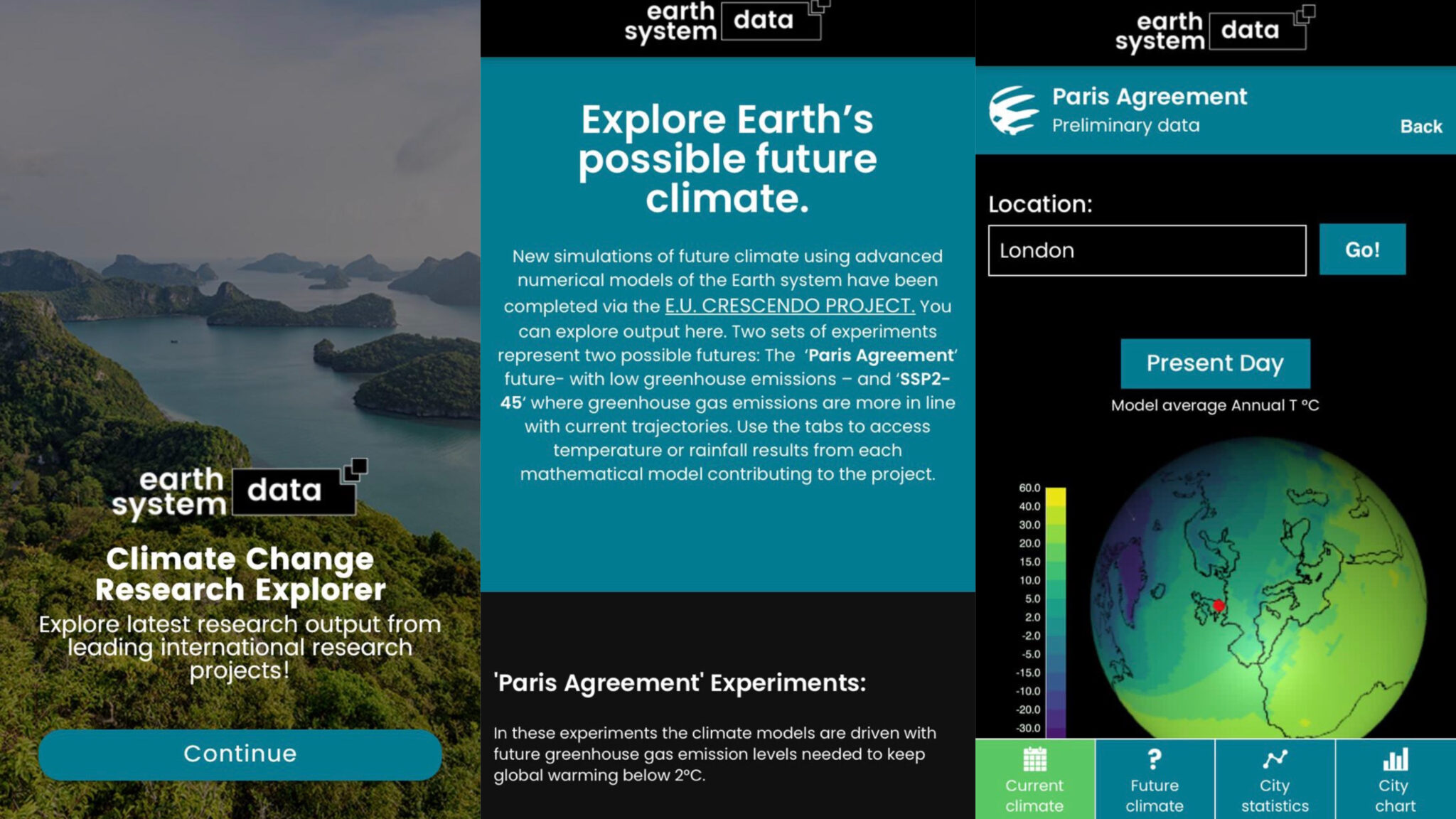
    The free to download ESD Research app was developed by EarthSystemData together with the Tyndall Centre for Climate Change at East Anglia University. It’s being launched the same week the United Nations COP26 climate conference was supposed to start in Scotland (which has been postponed until next year due to the coronavirus pandemic).

    The simulations allow users to see what their city would look like in 2100 if global warming is limited to below 2ºC, which is the goal of the Paris Agreement from 2015. Then, as a second scenario, it shows the results of a “moderate” emissions reduction, with global temperatures reaching about 4ºC in 2100.

    Using it is pretty straightforward. You go into the app, type in the location you want to look at and then the app shows simulations of the current climate and projections of the future with the two possible scenarios. ESD Research is already available to download for free in the Apple Store and in Google Play.

    The researchers at Tyndall said that many cities are predicted to warm by approximately the same as the planet average by the end of the century — both in the low CO2 emissions and the moderate CO2 emissions projections. The warming in the Arctic could be more than double or more the planetary average increase in temperature.

    Back Arrow