The World's Ten Most Threatened Species
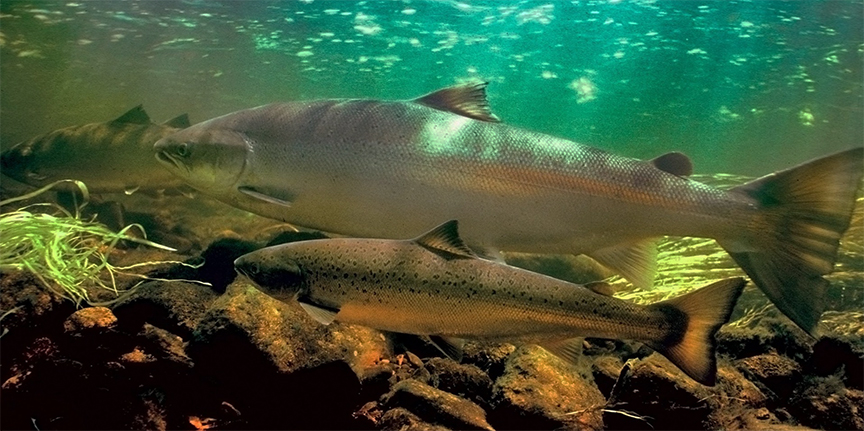
Endangered Salmon
Wild Salmon

                
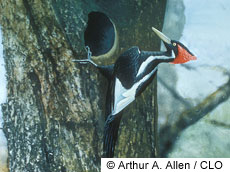
Ivory Billed WP
Ivory-Billed
Woodpecker
Armor
Leopard
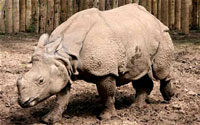
Javan Rhino
Javan
Rhino
Bamboo Lemur
Greater
Bamboo Lemur
Northern Right Whale
Northern
Right Whale
    
                
Mountain Gorilla
Mountain
Gorilla
LeatherbackTurtle
Leatherback
Turtle
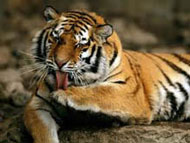
Siberian Tiger
Siberian
Tiger
Chinese Giant Salamander
Chinese Giant
Salamander
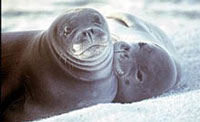
Hawaiian Monk Seals
Hawaain
Monk Seal
    

Endangered Species News (in Date Order) For the Past Several Months

Click on any link for the full story.

  • • What Killed 500-Plus Penguins?
    How Scientists Solved the Mystery

    {npr}

    Oct. 29, 2026 -Sailing toward the Danger Islands, Dr. Ralph Vanstreels had a good idea of what he might find: A lot of dead Adélie penguins.

    It was March 2024 and a virus had been sweeping through the area, leaving deceased birds in its wake.

    Vanstreels got the crime right but the culprit wrong. There were dead penguins but a virus was not to blame.

  • • The Sea Swallows a Nigerian Community
    Migratory Bird Habitat Disappears

    {MONGABAY}

    Oct. 28, 2026 -The point where land meets sea at Ayetoro, in southwestern Nigeria, is marked by the skeletons of now-submerged landmarks. Birdcalls, crashing waves, and the sounds of local fishing boats’ outboard engines wash over the crumbling remains of old buildings as well as a wetland that’s a vital stopover and wintering site for migratory waterbirds like Eurasian curlews, whimbrels, and common sandpipers.

    These birds are just some of the billions that travel vast distances each year in their annual migration between breeding sites far to the north and warmer climates during the Northern Hemisphere winter.

  • • Underwater Data Centers May Be Coming to the U.S.
    Smack in the Middle of Endangered Whale Habitat

    “Scientific

    Oct. 28, 2026 -The battle over where to put data centers is heading below the waves: the Trump administration is considering proposals to build two massive underwater data centers off the country’s coast. The sites selected for the projects—one in Cook Inlet, Alaska, and one in the Gulf of Maine—are smack in the middle of two endangered whale populations’ habitats.

    Whales are “skittish animals,” says Arial Brewer, a beluga researcher at the University of Washington and the National Oceanic and Atmospheric Administration. “A massive-scale project like this could really stress them out in a lot of different ways.”

  • • Sacred Mekong River Dolphins Celebrate
    Six New Additions After Joyful Breeding Season
    Endangered River Dolphin Population Shows Hopeful Signs of Recovery

    {HEALTHY HAPPY NEWS}

    Oct. 26, 2026 -River dolphins remain among the world’s most endangered species, whether swimming in the New World or the Old. Yet for now, things are looking up for these gentle creatures considered sacred by the people living along a stretch of the Mekong River in Cambodia, as the most recent calving season produced six beautiful baby dolphins.

    Local communities along the Mekong River have long held these dolphins in deep reverence, seeing them as spiritual guardians of the waters that sustain their families and livelihoods. The successful arrival of six new calves brings renewed hope to conservation efforts that have been ongoing for years along this precious stretch of river.

  • • Heartwarming Rescue Effort Saves 53
    Orangutans from Borneo Wildfires
    53 Orangutans Were Rescued From Raging Wildfires Across Borneo By Dedicated Conservation Heroes

    {HEALTHY HAPPY NEWS}

    Oct. 25, 2026 -Forest and peatland wildfires continue to burn across the island of Borneo, endangering the air quality for both humans and wildlife—and torching the food supply for critically endangered orangutans. Fortunately, thanks to an 18-year nonprofit that focuses on primate rescue and conservation in Indonesia, a total of 53 orangutans have been rescued from the fires.

    The dedicated team has worked tirelessly to locate and transport the vulnerable animals to safety, ensuring they receive the care they need after the trauma of the fires.

  • • Tiny Orphaned Walrus Calf Finds Hope
    and Healing at SeaWorld Orlando
    Wildlife Heroes Are Giving This Precious Orphan a Second Chance At Life

    {HEALTHY HAPPY NEWS}

    Oct. 23, 2026 -A tiny orphaned Pacific walrus calf has found new hope after being discovered alone on a remote northern Alaska beach. The five-month-old male calf, named Annautaq, weighed about 220 pounds when he arrived at SeaWorld Orlando.

    SeaWorld’s expert animal care and veterinary team now provides him with around-the-clock attention and nurturing. Only four US institutions currently have the specialized resources needed to care for walrus calves like Annautaq.

  • • Native Wildlife Thrives After Rats and Pigs Removed
    Heartwarming Island Comeback

    {HEALTHY HAPPY NEWS}

    Oct. 22, 2026 -Just one year after ecological restoration efforts on Samoa, forests, wildlife, and food resources are showing remarkable signs of recovery.

    Nu’utele Island is considered a Key Biodiversity Area for Samoa, and is home to one of the country’s most pristine native forests teeming (usually) with native species.

  • • Meet the Couple Dedicated to Saving Raccoons
    Hundreds of Them

    WAPO

    Oct. 22, 2026 -Nine years ago, Paul and Sarah Bookbinder were asked if they could take in two abandoned and injured raccoons. Paul, a veterinarian who focused on cats and dogs, was willing — but there was one problem: He knew nothing about treating raccoons.

    The Bookbinders agreed to keep the baby raccoons, known as kits, in their bicycle shed while they searched for a licensed wildlife rehabilitator. They expected the arrangement to be temporary. Instead, they quickly became attached to the kits, whom they named Stanley and Laurel.

  • • Mexico Slashes Protections for Vaquita Porpoises
    Endangering the World’s Rarest Marine Mammal

    ICN

    Oct. 20, 2026 -Known for their distinctive black-ringed eyes, lipstick-like mouth markings and timid, elusive nature, the vaquita is the world’s rarest marine mammal. Last year’s survey—carried out by a team of international scientists and state environmental officials—estimated just seven to 10 remain in the waters of Mexico’s Upper Gulf of California.

    Yet Mexican authorities announced last week that they were rolling back 2020 protections for the globally adored porpoise. Having declined from more than 550 in 1997 to just a handful today, conservationists warn the vaquitas’ future hangs in the balance.

  • • Federal Lawmakers to Introduce Bipartisan
    Bill to Ban Wild Sloth Imports
    Investigation Reveals Dozens of Imported Wild Sloths Died at a Planned Florida Tourist Attraction

    ICN

    Oct. 20, 2026 -Federal lawmakers want to ban imports of wild sloths to the United States, a move experts say could have global implications for the conservation of the tree-dwelling species.

    Maxwell Alejandro Frost (D-Fla.) is set on Tuesday to introduce a bill, co-sponsored by Laurel Lee (R-Fla.), known as the “SLOTHS Act”—Stopping Legalized Organized Trafficking and Harm to Sloths. It’s a reaction to mass sloth deaths at a planned attraction in Orlando.

  • • Deep-Sea Species Struggle to Recover
    After Deepwater Horizon Spill
    Scientists Monitoring the Deep Ocean Near the Disaster Site Found That Animal Populations Declined By As Much As 80 Percent

    ICN

    Oct. 19, 2026 -Across hundreds of miles of the northern Gulf of Mexico, a deep-water ecosystem collapsed after the massive 2011 Deepwater Horizon oil and gas spill, and recovery is uncertain, new research concludes.

    The study, published Monday in the Proceedings of the National Academy of Sciences, found that animal populations, including octopus, krill, squid and shrimp declined by 60 to 85 percent in the three-and-a-half years after the spill, with few signs of recovery since. Krill and lanternfish, both foundational species in the Gulf’s food web, were among the hardest hit. The findings also suggest that the die-off is causing genetic bottlenecks that could further hinder ecosystem recovery.

  • • Protecting Nature is a Public Duty
    Not a Wall Street Profit Opportunity

    {CLIMATE HOME NEWS}

    Oct. 19, 2026 -An Lambrechts is a biodiversity politics expert at Greenpeace International with extensive experience in biodiversity-related multilateral negotiations. She is the head of the Greenpeace delegation at the Convention on Biological Diversity (CBD) COP17 happening in Yerevan, Armenia.

    In 2022, COP15 delivered the landmark Kunming-Montreal Global Biodiversity Framework to halt and reverse biodiversity loss by 2030. With COP17 starting in Yerevan, we are now halfway to the deadline, and according to the first Global Review of progress, countries are not on track to meet the biodiversity targets, and implementation must accelerate fast.

  • • Injured Hornbill Gets Prosthetic Beak At Netherlands Zoo
    The Hornbill Had an Injury Leaving Both the Upper and Lower Portions of Its Beak Damaged

    {UPI}

    Oct. 17, 2026 -A southern ground hornbill at a Netherlands zoo has become the first bird in the world to receive 3D-printed prosthesis on both its upper and lower beak.

    "A bird that loses part of its beak loses much more than just a piece of its appearance," the zoo said on social media. "For the southern hornbill in Artis, it meant that he could not take care of himself and could not pick up more difficult food from the ground."

  • • The Birds I Waited 45 Years to See
    Carl Bergstrom Returns to New Zealand to Find the Rare Birds He Dreamed of Seeing As a Child Making An Extraordinary Comeback

    {Bloomberg}

    Oct. 17, 2026 -A wind from the sea drove droplets of condensing vapor against the gorse-covered hillside. My overshirt was soaked and my glasses frosted with a layer of fine mist. Far below, New Zealand’s capital city of Wellington was obscured by the cloudbank from which the country derives its original name: Aotearoa, “land of the long white cloud.” My companions, local conservation biologists, were packing away a radio antenna and reining in a dog.

    I was holding a four-month-old kiwi.

  • • Huge Groups of Hammerhead Sharks Spotted
    Gathering Off Australia’s Popular Beaches
    Drones Spotted Up to 100 Young, Endangered Hammerhead Sharks Gathering In a Single Sighting Near Popular Australian Beaches

    {ZME SCIENCE}

    Oct. 16, 2026 -The drones were supposed to help keep swimmers safe from sharks. But almost no one could believe it when the footage showed gatherings of up to 100 young hammerheads swimming in the shallow waters off some of Australia’s most popular beaches.

    For a species teetering on the brink of extinction, these crowded coastal waters may be far more important than anyone realized.

  • • US Coast Guard Helps Rescue Juvenile Humpback
    Whale Stuck On Sandbar Off New York's Fire Island
    After Several Hours Stranded Offshore, the Whale Freed Itself

    {13EYEWITNESS NEWS}

    Oct. 8, 2026 -Two juvenile humpback whales stranded on sandbars off New York's Fire Island returned to open water, with one helped by rising tides and crews that responded, including the U.S. Coast Guard.

    Coast Guard personnel responded to a report of a whale stranded in shallow waters at about 8:30 a.m. Their first concern was determining whether the animal was alive.

  • • Historic Bison Herd Reaches Four Digits
    on America’s Largest Private Conservation Land
    Two Decades of Steady Conservation Work Culminate In This Hopeful Milestone

    {HEALTHY HAPPY NEWS}

    Oct. 16, 2026 -As autumn settles across the wide Montana plains, a gentle wind carries the low rumble of hooves. A herd of American bison, once nearly lost to history, now moves in quiet triumph across open grasslands that stretch farther than the eye can see.

    The nonprofit American Prairie, steward of the nation’s largest private conservation initiative, announced that its free-roaming bison population has passed the 1,000 mark for the first time in the organization’s twenty-plus-year history.

  • • The World’s Heaviest Insect Was Almost Wiped Out
    Now It’s Breeding in the Wild Again

    {ZME SCIENCE}

    Oct. 13, 2026 -Imagine an insect the size of your hand. Its body stretches nearly 10 centimeters (4 inches), while its spiny legs can span twice that distance. It has no wings, can’t fly, and looks like something that crawled out of a prehistoric forest.

    Meet the w?t?punga, New Zealand icon and the world’s heaviest known orthopteran—relative of crickets and grasshoppers. Adult females can weigh around 35–40 grams, roughly as much as a small mouse. One exceptionally large, egg-carrying female weighed a staggering 71 grams (2.5 ounces). And despite its intimidating appearance, this nocturnal giant spends much of its life hiding among leaves and feeding on vegetation.

  • • At age 194, Jonathan the Tortoise Offers Clues to Longevity
    The Research Found a Subset of Jonathan’s Genes Remained Remarkably Stable Despite His Age

    WAPO

    Oct. 13, 2026 -Jonathan is blind, but the 194-year-old giant tortoise knows it’s time to eat when he hears Joe Hollins call his name.

    Jonathan chomps at the air, expecting Hollins to feed him pears, cucumbers or carrots. But a few times in recent years, Hollins, a veterinarian, tricked Jonathan and slid a cotton swab into the giant tortoise’s mouth to get a saliva sample.

  • • No Black-Footed Ferrets Found in Meeteetse
    40 Years After a Rescue Saved the Species

    AP Logo

    Oct. 13, 2026 -Wyoming wildlife managers are reporting that no black-footed ferrets are being detected in the cradle of the species’ conservation: the Absaroka Range foothills outside of Meeteetse, where the ferrets were saved after presumed extinction in the 1980s.

    A tough combination of plague and drought — both big issues for the embattled western species — are suspected causes of a population collapse in the Meeteetse area, where wildlife managers returned ferrets to the wild in 2016 after a three-decade-long absence

  • • New Penguin Species Discovered
    After More Than 100 Years
    Gentoo Penguins Were Secretly Hiding Four Distinct Species Among Them, and Nobody Knew About It Until Their DNA Spilled the Beans

    {ZME SCIENCE}

    Oct. 12, 2026 -On one of the world’s most remote island groups, a population of penguins has been hiding an evolutionary secret.

    They look almost identical to other gentoo penguins, with their black-and-white plumage, bright orange beaks and distinctive white markings above the eyes. But their DNA tells a very different story.

  • • As Rival Resorts Battle in a Bahamas Court,
    a Threatened Conch’s Nursery Is Caught in the Middle
    Scientists Who Study Conch Say the Species’ Habitat Needs Are More Important Than the Needs of Either Property

    ICN

    Oct. 11, 2026 -Queen conch larvae drift for two to three weeks before settling into seagrass, where their first food grows on the thin green blades. This is where they spend most of their first year, buried in the sand.

    In the Exumas region of the Bahamas, just south of East Sampson Cay, Shedd Aquarium researchers recorded the third-highest mean density of juvenile conch among the sites in a 2019 survey.

  • • Denver Zoo Welcomes First 2
    Southern White Rhinos In Its History
    4-year-Old Viazi and 3-Year-Old Mkuu Are the First of Their Species to Call the Denver Zoo Conservation Alliance Home

    {THE DENVER POST}

    Oct. 10, 2026 -A new species of rhino has arrived in Denver.

    The Denver Zoo Conservation Alliance welcomed two southern white rhinos — 3-year-old Mkuu and 4-year-old Viazi — after months of planning and updates to the zoo’s historic pachyderm habitat, zoo officials shared Saturday. The zoo announced the planned arrival of the new rhino species in late August.

    Mkuu is Swahili for “prince,” and Viazi is Swahili for “potatoes,” the zoo said.

  • • Trump Is Gutting the Endangered Species Act
    These 10 Species Could Pay The Price

    {ZME SCIENCE}

    Oct. 9, 2026 -The Supreme Court once billed the Endangered Species Act as “the most comprehensive legislation for the preservation of endangered species ever enacted by any nation.” Federal protections have been key to saving nearly 300 U.S. species — including the bald eagle, American alligator, and grizzly bear — from permanent extinction.

    Each year, the U.S. Fish and Wildlife Service, which is primarily responsible for implementing the law, evaluates species and lists them as “endangered” or “threatened.” When federal activity or private development has the potential to harm a listed species or its habitat, project developers are required to consult with the Service or obtain a permit prior to construction.

  • • Amani — Oldest Giraffe At Cheyenne
    Mountain Zoo — Euthanized At 26
    The 26-Year-Old Giraffe’s Health Was Declining Quickly

    {THE DENVER POST}

    Oct. 8, 2026 -On the last day before her death, Amani the reticulated giraffe enjoyed her favorite things: eating lettuce from guests, hanging out with her best friend, Lakeisha, and munching on crackers.

    Cheyenne Mountain Zoo staffers euthanized Amani on Wednesday because of a decline in her health, the zoo announced in a news release. At 26 she was the oldest giraffe at the zoo and the ninth-oldest giraffe in the Association of Zoos and Aquariums. The median life expectancy for a giraffe in human care is 20 years, according to the association.

  • • Wildlife Populations Have Plunged
    Globally, But Some Buck the Trend
    A New Report Found Populations of Thousands of Vertebrate Species Dropped 73 Percent On Average From 1970 to 2022.

    ICN

    Oct. 8, 2026 -A new report paints a dark picture of the state of global wildlife—but also highlights flickers of light where some populations are on the upswing.

    Over the past half-century, populations of thousands of vertebrate species across the globe have decreased in size by 73 percent on average, according to the “Living Planet” report published Wednesday by the nonprofits World Wildlife Fund and the Zoological Society of London. A number of factors contributed to this precipitous decline, including habitat loss, overexploitation and climate change.

  • • Jonathan the 194-Year-Old Tortoise Donates
    His Remarkable Epigenome to Human Aging Science
    Scientists Now Have His Unique Epigenome to Study Healthy Aging Across Species

    {HEALTHY HAPPY NEWS}

    Oct. 8, 2026 -Scientists studying longevity just welcomed an extraordinary new research partner: a 194-year-old giant tortoise named Jonathan. The gentle reptile, who lives on the remote island of St. Helena in the South Atlantic, is now the first of his kind to share his complete epigenome with researchers investigating how living creatures age so gracefully.

    Researchers say Jonathan’s genetic profile mirrors patterns seen in healthy, long-lived humans, offering a fresh perspective on aging across species. His advanced age and stable health have given scientists a rare biological benchmark that may help unlock secrets of vitality well into the later decades of life.

  • • Women Lead Community-Driven Effort to Protect Elephants
    Their Work Brings Hope For Both Wildlife and Future Generations

    {HEALTHY HAPPY NEWS}

    Oct. 6, 2026 -Across regions where elephants roam, a group of dedicated women is quietly reshaping how conservation works. Their focus is on involving entire communities in protecting these gentle giants.

    By building trust and sharing knowledge, they encourage neighbors to see elephants not as threats but as part of a shared future. Simple, respectful actions are making a lasting difference.

    "Working together, we can protect the land and the animals that call it home."

  • • Heartwarming Triumph as First Rewilded
    Gorilla Welcomes Newborn in Virunga Forest
    A Rescued Eastern Lowland Gorilla Gives Birth to a Healthy Infant In Virunga National Park

    {HEALTHY HAPPY NEWS}

    Oct. 5, 2026 -In a lush corner of Virunga National Park, the morning mist still clings to the treetops when a tiny hand reaches up to touch a mother’s face. That mother is no ordinary ape—she is one of the very first eastern lowland gorillas ever to be rescued as an orphan, nurtured back to health, and returned to the wild.

    Her name is kept gentle and private by the field team, yet her story is already legendary among conservationists. After losing her own family to poachers, she was bottle-fed, taught to climb, and eventually released into the very forest that once held her captive in fear. Years later, she found a mate, built a nest, and on May 21st she delivered new life under those same branches

  • • Greenland Debates Fate of World’s Slowest Shark
    To Cull Or Not to Cull

    TGL

    Oct. 5, 2026 -‘When I accidentally catch a shark, I bring it to my dogs,” Henrik Jensen, a 27-year-old from Greenland’s west coast, says casually. “I don’t let it back down because [the sharks] bully me and cut my lines.”

    Jensen has fished for halibut in Ilulissat, Greenland’s third largest town, for a decade. He works an hour north of the town’s main iceberg-laden fishery, which sustains the livelihood of nearly 400 fishers. There, the halibut are bigger and more plentiful, but so are the Greenland sharks.

  • • How India Saved Its Tigers,
    Lions, Rhinos and Elephants
    India’s Wildlife-Conservation Success Holds Lessons For Other Environmental Efforts

    {The Economist}

    Oct. 4, 2026 - In just the past few weeks Indians have been mauled by tigers (in the west), attacked by leopards (in the north) and trampled by elephants (in the east). Like so many tragedies that occur with depressing frequency in the country—stampedes and bridge collapses are other good examples—these deaths highlight the failures of the state. Yet, in an odd way, they also reflect its successes. Indians are running into wild animals more often because India has become remarkably good at protecting them.

  • • Colorado State Patrol Warns of Peak Wildlife
    Crash Season With Nearly 3,300 Crashes So Far This Year
    CSP Says Wildlife Crashes Are Increasing Each Year, With White-Tailed Deer and Elk As the Most Frequently Hit Animals

    {DENVER7}

    Oct. 4, 2026 -Colorado is in peak wildlife crash season, according to the Colorado State Patrol.

    For many species, it is also peak mating season, and CSP officials said animals are more likely to be crossing roadways.

    Some of the highest-risk areas include parts of I-70, I-25 and US-285 in Morrison.

  • • Colorado’s Wildlife Bridge Saves 91%
    of Animals from Road Collisions
    Drivers Report Fewer Sudden Stops and Greater Peace of Mind On the Road

    {HEALTHY HAPPY NEWS}

    Oct. 3, 2026 -High in the Rockies, a sweeping overpass has become a quiet hero for both wildlife and motorists. The structure lets elk, mule deer, and other animals travel safely above the asphalt, sparing them from the dangers below.

    Since the bridge opened, state officials have recorded a 91 percent drop in wildlife-vehicle collisions along that stretch of highway. The dramatic reduction has thrilled both conservationists and drivers who once braced for sudden encounters at night.

  • • Nature Triumphs as Sycamore
    Gap Stump Sprouts Life Anew
    After a Heartbreaking Loss, the Iconic Sycamore Gap Tree is Showing Remarkable Signs of Recovery With Vibrant New Growth

    {HEALTHY HAPPY NEWS}

    Oct. 1, 2026 -Three years after the illegal felling of one of Britain’s most beloved trees, fresh aerial images reveal the stump is thriving once again. The famous sycamore, which stood for over 150 years in a gap along Hadrian’s Wall, is proving that life finds a way.

    The new growth, known as basal sprouts, has emerged in a beautiful ring around the stump. These shoots have grown rapidly, already reaching impressive heights that have surprised and delighted conservationists and visitors alike.

  • • Former Fairways Blossom into Seabird
    Sanctuary Along English Coastline
    Local Families Watch Avocets and Terns Thrive Where Putts Once Echoed

    {HEALTHY HAPPY NEWS}

    Sept. 30, 2026 -England’s coastline now hosts a thriving wetland reserve where rolling fairways once stretched. The National Trust’s Sandilands site welcomed plovers, terns, avocets, and lapwings even before the gates opened to visitors.

    Grounds once maintained for sport now brim with native grasses and shallow pools. These restored habitats provide quiet nesting spaces and abundant food for coastal birds returning in increasing numbers.

  • • El Niño-Driven Wildfires Overwhelm
    Indonesia’s Orangutan Population
    The Toll is Huge’

    TGL

    Sept. 30, 2026 -The mother’s hands were peeling from walking on the torched ground. Her eight-month-old baby, which clung to her side, was dehydrated and thin. The pair, named Mama Abu and Abu (“ash” in Indonesian), were found in an oil palm subsidiary estate, rescuers say.

    The orangutan pair were saved last month from wildfires that are devouring Indonesia’s forests and peatland, unleashing thick smog, and destroying the habitat of some of the planet’s most vulnerable species.

  • • Former Fairways Blossom into Seabird
    Sanctuary Along English Coastline
    Abandoned Fairways Now Pulse With Life As Seabirds Return to England’s Coast

    {HEALTHY HAPPY NEWS}

    Sept. 30, 2026 -England’s coastline now hosts a thriving wetland reserve where rolling fairways once stretched. The National Trust’s Sandilands site welcomed plovers, terns, avocets, and lapwings even before the gates opened to visitors.

    Grounds once maintained for sport now brim with native grasses and shallow pools. These restored habitats provide quiet nesting spaces and abundant food for coastal birds returning in increasing numbers.

  • • Colorado Parks and Wildlife Suspends Wolf Depredation Policy
    Due to Concerns Over Population

    {CBS NEWS}

    Sept. 30, 2026 -Colorado Parks and Wildlife says the state's grey wolf population may not grow this biological year, and it is suspending its directive on how to handle chronic depredation.

    They said they will evaluate requests to lethally remove wolves more conservatively because of population concerns. Under the Colorado Wolf Restoration and Management Plan, CPW says it is taking an adaptive, context-specific approach to wolf management.

  • • Saving the Siamese Crocodile
    Cambodia Moves to Protect One of the World’s Last Wild Populations

    TGL

    Sept. 29, 2026 -In the 1990s, conservationists in Cambodia feared the Siamese crocodile had disappeared for good. Fishing and hunting had devastated the species throughout the 20th century, leaving populations across its native south-east Asia on the brink of extinction.

    But in villages dotted among the wetlands of the remote Cardamom mountains, Indigenous Chorng communities still reported seeing them. Passing this knowledge to researchers surveying the area in 2000 led to an official recording of the species – and bolstered the mission to revive the population.

  • • Camera Cash Rewards Turn Former Hunters
    Into Wildlife Guardians in Borneo
    Villagers Earn Steady Income By Photographing Protected Species Instead of Hunting Them

    {HEALTHY HAPPY NEWS}

    Sept. 29, 2026 -In the heart of Borneo, a simple pay-per-picture plan is turning hunters into heroes for endangered wildlife. Villagers in nine communities across Indonesia’s West Kalimantan province now receive cash rewards for snapping photos or recording the calls of orangutans, hornbills, and other protected species.

    Each verified image or sound file brings extra income to families who once relied on hunting. The program replaces traps and snares with smartphones and patience, offering both financial stability and a renewed sense of pride in the surrounding rainforest.

  • • Saving the Siamese Crocodile:
    Cambodia Moves to Protect One of the World’s Last Wild Populations

    TGL

    Sept. 29, 2026 -In the 1990s, conservationists in Cambodia feared the Siamese crocodile had disappeared for good. Fishing and hunting had devastated the species throughout the 20th century, leaving populations across its native south-east Asia on the brink of extinction.

    But in villages dotted among the wetlands of the remote Cardamom mountains, Indigenous Chorng communities still reported seeing them. Passing this knowledge to researchers surveying the area in 2000 led to an official recording of the species – and bolstered the mission to revive the population.

  • • The Trump Administration’s Critical Minerals
    Agenda Comes for America’s ‘Forgotten Wildlife Corridor
    What Will Happen to Vulnerable Plants and Animals?

    ICN

    Sept. 27, 2026 -On a cold and overcast spring morning, Katie Fite stood in one of the country’s last sage-grouse strongholds, contemplating the wooden stakes in the ground that she fears warn of its destruction.

    Every spring, males of the chunky bird species with spiky tail feathers come to a dwindling number of locations to strut, pop their inflatable white neck pouches and make a “paloop, paloop” sound in an attempt to court a mate.

  • • Ospreys Are Disappearing Along the East Coast
    Scientists Think They Know Why

    WAPO

    Sept. 27, 2026 -Bryan Watts has spent more than three decades watching ospreys reclaim the Chesapeake Bay, returning each spring from South America to crowd its tidal rivers and creeks, shorelines, channel markers and nesting platforms. The William & Mary biologist followed their recovery from the DDT era as the bay became home to the world’s largest breeding population of ospreys.

  • • The Precarious Existence of Critically Endangered Gorillas
    The Importance of Gorilla Conservation

    {EARTH.ORG}

    Sept. 24, 2026 -Have you ever wondered what it is like to stand face to face with a creature so powerful yet so achingly human in its gaze? Imagine, for a moment, being in the heart of Africa’s mystical forests, surrounded by towering trees and the ethereal sounds of nature. And there, in that sacred realm, you find yourself in the presence of gorillas – these gentle giants, our kin in the animal kingdom, who hold a mirror to our own humanity. It i a question that tugs at the soul: What is it like to share a moment, a connection, with these magnificent beings?

  • • Mississippi Wildlife Rescue Runs
    a Boot Camp for Baby Raccoons
    Staff Members Create a Safe, Nurturing Environment That Helps the Little Ones Grow Strong and Confident

    {HAPPY HEALTHY NEWS}

    Sept. 24 2026 -In the heart of Mississippi, a dedicated wildlife rescue team has turned their facility into a unique training ground for orphaned baby raccoons.

    The center’s innovative approach focuses on preparing these vulnerable creatures for successful lives in the wild through careful guidance and care.

  • • ‘The Eels Were Climbing Out of the Water to Die
    Why Did Every Fish in This Idyllic Lake Perish Overnight?

    TGL

    Sept. 24, 2026 -When Alistair and Diane Gould bought Furnace Brook in 2013, they had big plans. It was an idyllic spot: a stream-fed fishing lake nestled in a secluded valley in the High Weald, East Sussex, surrounded by woodland and fields. “People loved to come fishing here because it’s so beautiful,” says Diane. “Some of them had been coming for so many years that they got to know the individual fish.”

    Diane moved here from Kent in 2000, when Furnace Brook was owned by a distant relative. Her two younger sons, then 10 and 14, flourished. They would chat to the anglers about the fish they were catching and throwing back in, and sell them bacon sandwiches

  • • Project Will Harness Technology to Track
    Amazon Biodiversity In Real Time
    Leaders of $100 Million Effort Will Use Automated Detection Methods and Computer Models to Monitor Species’ Trends

    {Science}

    Sept. 23, 2026 -Scientists can tell within days whether a grove of trees has been felled anywhere in the world, thanks to satellite imagery. But when it comes to knowing what’s happening in real time to the species that live there, researchers remain woefully blind.

    “We have good technology that can monitor forests from above,” says Emiliano Ramalho, an ecologist and scientific director for the Mamirauá Institute for Sustainable Development, a Brazilian nonprofit research organization working in the Amazon rainforest. “But this does not monitor what’s under the canopy.”

  • • The World’s Largest Flowers Smell Like
    Death and They’re About To Go Extinct
    The 42 Known Species of the Genus Rafflesia Are Under Threat Due to Deforestation and Habitat Destruction

    {ZME SCIENCE}

    Sept. 23, 2026 -The stench of decay announces death—but Rafflesia plants turn it on like a neon sign. Forty-two parasitic species exude the smell of rot to lure insects, thriving under the guise of death. From a distance, the flowers could be mistaken for something long past its prime, their massive blooms draped across the forest floor. Up close, the effect is even more striking: a putrid, almost tangible odor that seems to hang in the air, signaling that something is very, very wrong. This foul aroma isn’t accidental—Rafflesia cranks out the scent of rotting flesh like a siren call, drawing in carrion flies to carry out the plant’s reproductive work.

  • • Ten Lions Found Dead In Suspected
    Poisoning At Tanzania Wildlife Reserve
    The Lions Were Discovered On September 18 in the Ndutu Area of Endulen Ward in Arusha Region

    REUTERS

    Sept. 20, 2026 - Ten lions were found dead in Tanzania's Ngorongoro wildlife reserve this ?week and preliminary findings suggest they mayhave been poisoned, the area's management authority said.

    The deaths raise concerns over the conservation of lions in ?one of Africa's most renowned wildlife ecosystems. Poisoning has been a recurring threat to ?large carnivores across parts of East Africa, often linked to conflicts between predators and livestock owners.

  • • Tiny New Wildcat Species Discovered in
    Bolivia After Century-Long Hiatus
    Scientists Celebrate First New Wildcat Species Discovery in Over a Century

    {HEALTHY HAPPY NEWS}

    Sept. 18, 2026 -The rolling, mist-covered cloud forests of Bolivia have gifted the world something extraordinary: a brand-new species of wildcat, the first such discovery in more than a hundred years.

    Researchers who spent months trekking through dense undergrowth and listening for unfamiliar calls finally came face-to-face with the petite feline locals call the Tilcayo.

  • • Trump Targets Big Bad Wolves
    But Ranchers Say Other Administration Actions Drive Their Woes

    ICN

    Sept. 18, 2026 -America’s centuries-old conflict with wolves took another turn earlier this month when President Trump ordered the animals be stripped of federal protections across several U.S. states, claiming the action will provide economic relief for ranchers.

    Alongside a suite of regulatory reviews to “promote financial viability” for ranchers, Trump ordered the Interior secretary to begin the process of removing gray and Mexican wolves from the endangered species list, and directed the Agriculture secretary to encourage states to make it easier for ranchers to shoot wolves.

  • • Whales Have Rebounded in the Southern Ocean, But...
    Scientists Worry Commercial Fishing Could Threaten Their Comeback

    ICN

    Sept. 17, 2026 -For the second year in a row, Antarctica’s industrial krill fishing fleet halted operations ahead of schedule after reaching its seasonal catch limit.

    The vessels had been harvesting the tiny shrimp-like crustaceans from waters around the Antarctic Peninsula and the South Orkney Islands, located about 400 miles north of the peninsula. Under current rules, the fleet must stop fishing once it collectively harvests 620,000 tons of krill.

  • • Wild Bison Return to Mexico’s
    Desert After Two Centuries
    Restoring Ancient Balance

    {HEALTHY HAPPY NEWS}

    Sept. 16, 2026 -A series of reintroductions have seen the bison return to a landscape in Mexico’s Chihuahua Desert after a 200 year absence. Having acted as ecosystem anchors for the vegetation in this vital biosphere reserve for millennia, their return is seen as a major step towards fortifying the area’s sensitive arid grasslands.

    A vast bison herd is once again roaming free across the desert, where they play an essential role in maintaining the balance of the fragile ecosystem. Their grazing patterns help spread seeds and create spaces for native plants to flourish in this remarkable landscape.

  • • Governor Polis Takes Executive Action
    to Protect and Support Colorado Pollinators
    Three Cheers For the Governor

    {9NEWS}

    Sept. 16, 2026 -Today, at a pollinator garden at the Denver Zoo, Governor Polis took Executive Action to support and protect Colorado pollinators, which play a pivotal role in the great outdoors Coloradans love and the foods producers grow across our state.

    “Pollinators help grow everything we love in Colorado. From the peach groves and corn fields across the Western Slope to the Rocky Ford melons, and the mountainsides of wildflowers in Crested Butte, we need pollinators. Colorado’s economy depends on agriculture and outdoor recreation, and that's why protecting and strengthening Colorado’s natural pollinators is so important. For our natural beauty and health ecosystems, the action I am taking today will help pollinators thrive,” said Governor Polis.

  • • Inside the Mission to Save Orangutans From Raging Fires
    The Lush Mountainous Rainforests of West Kalimantan Are a Crucial Habitat For Critically Endangered Bornean Orangutans, But...

    {ABC AU NEWS}

    Sept. 15, 2026 -On the fringes of a national park in Indonesian Borneo, a team of rangers and animal rescuers snake their way through the bush.

    Dry leaves crunch underfoot as green foliage gives way to hectares of burnt land.

    A thick haze of smoke fills the air as nearby peatland and forest fires continue to rage.

  • • Gray Whales Are Washing Up Dead On the West Coast
    The Reason Is Alarming

    {SCIENTIFIC AMERICAN}

    Sept. 9, 2026 -The bodies kept appearing as if out of nowhere. In March a whale corpse was found floating in San Francisco Bay, seagulls perched on top like vultures at carrion. Then, in April, a whale was found dead and beached in Oregon, the arc of its carcass camouflaged against the surf. That same month, another whale, this one a juvenile, was found lifeless and lodged among woody debris in a Washington State river, miles from the ocean.

    As of mid-August, 187 gray whales have been found dead this year along the West Coast, from Mexico to Alaska.

  • • States Sue Over Trump’s Cuts to Endangered Species Rules
    Two Lawsuits Seek to Reverse the Trump Administration’s Moves to Open the Habitats Of Imperiled Wildlife to Commercial Activities

    NYT

    Sept. 9, 2026 -Twenty states and the District of Columbia sued the Trump administration on Wednesday over what they called the most severe cuts to protections for wildlife in the half-century since the passage of the Endangered Species Act.

    Two lawsuits filed in federal court in California challenged a series of regulatory changes that opened the habitats of imperiled animals to drilling, farming, logging and other commercial activities.

  • • Adorable Critically-Endangered Penguin
    Chicks Hatch in Record Numbers
    Pure Joy for Conservation

    {HEALTHY HAPPY NEWS}

    Sept. 8, 2026 -Down in South Carolina, something wonderfully fluffy and heartwarming is happening. Ripley’s Aquarium of Myrtle Beach is celebrating a record-breaking “baby boom” of critically-endangered African penguin chicks. Seven adorable little ones have hatched this season, and conservationists couldn’t be happier.

    Five of the precious chicks arrived recently, joining two siblings who hatched back in May. Together, they represent the aquarium’s most successful nesting season ever for their resident African penguins. It’s a big deal for a species facing serious threats in the wild.


Back Arrow
  • • Seattle Light Rail’s Electrical System
    Zaps Some Lake Washington Fish
    Sound Transit’s New Light Rail Trackway Across Lake Washington Runs Alongside the Westbound Lanes of Interstate 90.

    “SeattleTimes

    Sept. 3, 2026, -Sound Transit disclosed Thursday that electric current from light rail operations along the I-90/Homer M. Hadley floating bridge is suspected of killing Lake Washington fish.

    An estimated 2,000 fish, mostly nonnative species, have died near the bridge. Exact counts are difficult, in part because many have decomposed, transit staff said.

  • • Trump Order Directs Officials to Consider
    Stripping Protections For Gray Wolves
    Interior Department Given Three Months to Decide Whether Wolves Can Be Removed From Endangered Species List

    TGL

    Sept. 1, 2026, -Donald Trump signed an executive order on Friday directing the interior department to consider de-listing gray wolves from the Endangered Species Act and to contemplate whether the agency could make it easier to authorize killing them.

    The order gives interior secretary Doug Burgum three months to determine whether gray wolves and Mexican gray wolves have recovered enough for the federal government to de-list them.

  • • Trump Administration’s Gutting of Endangered
    Species Act Could Legalize Extinction
    Rescinding the Regulatory Definition of ‘Harm’ Opens the Door to Degradation of Habitat Species Need to Survive

    {WyoFile}

    Sept. 1, 2026, -Had Donald Trump been president in 1973, when Richard Nixon signed the Endangered Species Act into federal law, the Gunnison sage-grouse would be extinct. Close to 90% of all Gunnison sage-grouse remaining on the planet are in the Gunnison River Basin of west-central Colorado. The rest are in Utah. They’ve been extirpated from Arizona and New Mexico.

    The species is critically endangered in fact, if not by official decree. It is protected by the act as just “threatened” because the Interior Department lost a lawsuit brought by Gunnison County, Colorado, the states of Utah and Colorado, and ranching, livestock and energy-development interests.

  • • One Male Bird Is Almost Single-Handedly
    Keeping His Species Alive in Britain
    Britain Came Close to Losing This Bird

    {ZME SCIENCE}

    August 28, 2026, -Take six chicks, two different nests, and two females, and add one very active (and very promiscuous) male; and, apparently, that’s a winning recipe for the Montagu’s harrier in the UK.

    The male is called AU (like the chemical symbol for gold). He appears to be the only adult male Montagu’s harrier breeding in the UK, but he’s doing his best to keep the species going. In 2026 alone, he fathered six chicks with two females at nests just a kilometre apart. Since he first bred in 2018, AU has raised at least 16 young. For a bird that recently disappeared entirely in Britain, that’s quite the achievement.

    In fact, the species’ survival in the country could depend entirely on AU.

  • • Struggling River Dolphins Get
    Jaw-Dropping Sanctuary Gift
    Will Restore Your Faith in Conservation

    {HEALTHY HAPPY NEWS}

    August 27, 2026 -In a heartwarming victory for endangered wildlife, Pakistan has established an incredible sanctuary spanning 250 miles along the majestic Indus River, creating a safe haven for one of the world’s rarest freshwater dolphins. This uplifting conservation effort protects approximately 440 endangered Indus River dolphins, giving these extraordinary cetaceans room to flourish in their natural habitat.

    The newly expanded sanctuary combines previously separate protected areas into one continuous 250-mile stretch of river paradise. This wholesome initiative addresses decades of habitat loss that threatened these gentle creatures as economic development brought dams, irrigation canals, and other infrastructure to the region.

  • • The Ganges Shark’s Last Refuge has Been Found
    Now Comes the Fight to Save It

    {CNN Science}

    August 26, 2026 - The Ganges shark is nothing if not elusive. Living in murky, brackish water it is one of only three river shark species globally — and is almost impossible to see in the wild. It’s never been photographed alive. The only evidence biologists have to go by is when one turns up dead as bycatch. Even then, they might just find a fin.

    The critically endangered species lives across parts of Pakistan, India, Bangladesh, Malaysia and Myanmar, but it’s thought most populations are dwindling. An estimated 240 adults remain according to the IUCN Red List of Threatened Species. The last published sighting of a Ganges shark near its namesake river was in 2017.

  • • Fisherman Reels In Massive ‘Ghost
    Fish’ That Vanished 60 Years Ago
    What It Means Will Make You So Happy

    {HEALTHY HAPPY NEWS}

    August 25, 2026 -Jack Gardner thought his eyes were playing tricks on him when he felt the powerful tug on his fishing line. The captain of the Dominator and his crew were fishing in the North Sea when something absolutely enormous took the bait.

    What they pulled from the water that day left them speechless.

    An Atlantic bluefin tuna — a species that had completely vanished from these waters for 60 years — emerged from the depths. The magnificent fish measured over 8 feet long and represented what Gardner called the greatest catch of his entire career.

  • • Baby Right Whales Bring Hope
    North Atlantic Right Whales Were Once So Thoroughly Hunted They Nearly Went Extinct

    {LOE.ORG}

    August 21, 2026 -North Atlantic right whales were once so thoroughly hunted they nearly went extinct. In fact, they were called right whales because they were considered the “right” ones to hunt, as they lived close to the shore and floated on the surface once killed.

    When hunting these mammals was outlawed, they slowly started to bounce back, but today right whales are dealing with new deadly threats from humans. So, it’s a relief to have a successful calving season like this year, with 23 new calves, the most since 2009

  • • Furry Visitor Returns After a Century
    It’s Pure Joy for Wildlife Lovers

    {HEALTHY HAPPY NEWS}

    August 21, 2026 -On June 23rd, a motion-activated camera along the Bronx River captured something that made conservationists absolutely leap with joy: a furry brown streak darting past the lens. It was a river otter—the first spotted in this New York City borough in approximately 100 years.

    The heartwarming sighting is more than just an adorable wildlife moment. It’s compelling proof that decades of dedicated conservation and restoration work along the Bronx River are truly working.

  • • Here’s What It Takes to Save the Orangutan
    World Orangutan Day 2026:

    {The Atlantic}

    August 19, 2026 -After humans, orangutans are among the most intelligent beings on Earth. They are self-aware, sentient persons, and as such they deeply feel loss and grief.

    Sharing 97% of our DNA, they are one of our closest relatives in the animal kingdom. That shared DNA shows up in surprising ways, from problem-solving and their use of tools to their social bonds and even their sense of humor.

    Despite this, they are also one of the most critically endangered animals in the world.

  • • Majestic Birds Return Home After 600 Years
    This Will Make You Believe in Nature’s Miracles

    {HEALTHY HAPPY NEWS}

    August 19, 2026 -In a moment that has conservationists and nature lovers absolutely overjoyed, white storks have officially returned to nest in Derbyshire, England—for the first time in an astonishing 600 years. The last time these magnificent birds called this region home, medieval England was a very different place, and now their homecoming is being hailed as one of the most heartwarming wildlife victories in modern British history.

    The large white wings of these graceful creatures have finally graced the English Midlands skies once again, bringing hope and pure joy to everyone witnessing this miraculous return. After centuries of absence, the storks have chosen Derbyshire as their nesting ground, proving that dedicated conservation work truly can turn the tide for threatened species.

  • • Here’s What It Takes to Save the Orangutan
    World Orangutan Day 2026:

    {EARTH.ORG}

    August 19, 2026 -After humans, orangutans are among the most intelligent beings on Earth. They are self-aware, sentient persons, and as such they deeply feel loss and grief.

    Sharing 97% of our DNA, they are one of our closest relatives in the animal kingdom. That shared DNA shows up in surprising ways, from problem-solving and their use of tools to their social bonds and even their sense of humor.

    Despite this, they are also one of the most critically endangered animals in the world. Deforestation, habitat loss, poaching and human-orangutan conflict are driving them closer and closer to the edge of extinction.

  • • Florida Sets Record For Sea Turtle Nests
    But Trump Move Could Stall Recovery
    Loggerhead Turtles Abound This Season But Rollback of Endangered Species Act Protections Could Threaten Future

    TGL

    August 16, 2026 -Wildlife groups in Florida are celebrating record numbers of sea turtle nests this season, but experts warn Donald Trump’s recent gutting of the Endangered Species Act (ESA) could reverse decades of their recovery from the edge of extinction.

    With more than two months of the summer nesting season still to run, loggerhead turtles have already made 13,770 nests, hundreds more than recorded in any previous year, along an 8.5-mile stretch of shoreline monitored by the Loggerhead Marinelife Center in Juno Beach, on Florida’s Atlantic coast.

  • • This 110-Year-Old Treaty Saved
    Hundreds of Birds From Extinction
    And It’s Still Working Today

    {HEALTHY HAPPY NEWS}

    August 16, 2026 -Sometimes the best news is a reminder that humanity got something beautifully right—and it’s still making a difference more than a century later. On this day 110 years ago, the United States and Canada came together to sign the Migratory Bird Treaty, a landmark agreement that would change the fate of hundreds of bird species forever.

    Before this treaty, unregulated hunting was pushing many beloved bird species toward the brink of extinction. But leaders on both sides of the border recognized something important: birds don’t respect human boundaries, and protecting them required cooperation across nations.

  • • Struggling Baby Salmon Just Got a Second Chance
    And the Results Will Restore Your Faith in Nature

    {HEALTHY HAPPY NEWS}

    August 15, 2026 -Along California’s breathtaking redwood coast, something beautiful is happening beneath the surface of Prairie Creek. After more than a decade of patient restoration work, conservationists are witnessing a miracle of nature: young salmon are thriving like never before.

    Prairie Creek serves as one of the last refuges for three threatened salmon species — California Coastal Chinook, Northern California steelhead, and coho salmon. For years, these fish struggled to survive in a creek that had been damaged and constrained by human development.

  • • Heartwarming Rescue: Tangled Mama
    Manatee Freed While Baby Watches
    Faith in Humanity Restored

    {HEALTHY HAPPY NEWS}

    August 12, 2026 -A touching wildlife rescue unfolded last week on the peaceful waters of Georgia’s coastal islands, proving that everyday heroes walk—and boat—among us. When a local fishing guide noticed something wasn’t right with a manatee near St. Simons Island, he didn’t hesitate to take action.

    The gentle giant had become hopelessly tangled in crab trap lines along the Mackay and Hampton rivers. Making the situation even more heart-wrenching, her young calf refused to leave her side, watching anxiously as his mother struggled.

  • • The Return of the Caspian Tiger:
    How a Species Feared Extinct Has Come Back to Kazakhstan

    TGL

    August 11, 2026 -On 31 July, “Umit” – which means hope in Kazakh – was released into a nature reserve on the edge of Lake Balkhash after more than a decade of careful planning to return the caspian tiger to the region. With this release, Kazakhstan became the first country to restore its tiger range after they had been thought extinct, with the last reliable sighting in the country recorded more than 70 years ago.

    Umit – a wild-caught female tiger transported from the Russian far east – will be joined by more big cats in the coming years, with plans to establish a self-sustaining population of about 50. A wild-caught male flown from Russia is still being monitored by authorities and will be released when he is judged fit to survive alone.

  • • Tiny Endangered Hippo Just Took Its First Wobbly Steps
    Pure Joy Overload

    {HEALTHY HAPPY NEWS}

    August 10, 2026 -Toronto Zoo is celebrating a moment of pure wonder this week as a critically endangered pygmy hippopotamus successfully gave birth to an absolutely adorable calf. The arrival marks a triumphant milestone in conservation efforts and has instantly melted hearts across the globe.

    The mama hippo endured 1.5 hours of active labor before her tiny baby made its grand entrance, tiny feet appearing first in a scene that had zoo staff holding their breath with anticipation. Within just 15 minutes of taking its first breath, the determined little calf was already attempting to stand, teetering on wobbly legs in an inspiring display of natural instinct and strength.

  • • Saving 100 Species From Extinction
    Hollywood Star’s $200M Mission Will Melt Your Heart

    {HEALTHY HAPPY NEWS}

    August 9, 2026 -In a move that’s restoring faith in humanity, Hollywood icon Leonardo DiCaprio has announced a groundbreaking $200 million initiative designed to pull 100 of the world’s most critically endangered species back from the brink of extinction. The Phoenix Species Project represents one of the most ambitious conservation efforts ever undertaken by a private coalition.

    The initiative builds on DiCaprio’s remarkable 2021 success with the Protecting Our Planet Challenge, where he partnered with the Bezos Earth Fund and nine other conservation philanthropies. That effort successfully protected at least 30% of the planet’s most vital land, freshwater, and marine ecosystems—a victory that sent ripples of hope through the conservation community.

  • • Threatened Sea Turtles Make Stunning Comeback
    Georgia Beaches Witness Heartwarming Record

    {HEALTHY HAPPY NEWS}

    August 8, 2026 -Georgia’s beaches are celebrating a milestone that will warm any nature lover’s heart. Loggerhead sea turtle nests along the state’s Atlantic coast have shattered records, reaching the highest count in 37 years.

    The incredible numbers represent the most nests documented on Georgia beaches since scientists began comprehensive monitoring in 1989. This feel-good news signals hope for a species that’s been fighting for survival.

  • • Ireland’s Rarest Bird Just Made a Jaw-
    Dropping Comeback After 100 Years
    When Irish Eyes Are Smiling

    {HEALTHY HAPPY NEWS}

    August 8, 2026 -More than a century after Ireland lost its largest and most majestic bird of prey, conservationists are celebrating an incredible milestone that will restore your faith in nature’s resilience. A white-tailed sea eagle chick has been successfully born and fledged at Fota Wildlife Park in County Cork—marking a historic moment in Ireland’s conservation journey.

    The white-tailed sea eagle, with its impressive wingspan and commanding presence, completely disappeared from Irish skies over 100 years ago. But thanks to dedicated wildlife experts and tireless conservation work, these magnificent raptors are making a triumphant return to the Emerald Isle.

  • • How a Soviet Ice Breaker Played Music to Thousands
    of Ice-Trapped Whales to Save Them From Starving
    Operation Beluga

    {ZME SCIENCE}

    August 8, 2026 -The Soviet Union now belongs largely to memory and history books, and many chapters of its history are outright unsavory, to say the least. But Operation Beluga (“Belukha” in Russian) isn’t one of them.

    Operation Beluga wasn’t your typical Cold War operation. It involved sending an icebreaker into heavy pack ice and, according to Soviet reports, blasting music over its deck loudspeakers to coax thousands of trapped beluga whales toward safety off the Chukchi Peninsula.

  • • Tiny Ocean Creature With Punk Rock
    Attitude Just Made Conservation History
    This Critically Endangered Ocean Dweller Walks on the Seafloor Using Hand-Like Fins Instead of Swimming

    {HEALTHY HAPPY NEWS}

    August 7, 2026 -National Geographic just hit an extraordinary conservation milestone, and the star of the moment is an adorable grumpy-looking fish no bigger than your thumb. The red handfish, sporting bright red “hands” and what can only be described as a permanent punk rock pout, has become the 18,000th species captured in the Photo Ark project.

    This tiny ocean dweller doesn’t swim like most fish—it struts. Using modified pectoral fins that look remarkably like little hands, the red handfish walks along the seafloor with all the attitude of a rock and roll frontman taking the stage.

  • • Hunters Cry Fowl Over Trump Review They
    Fear Could Hammer Duck Populations Nationwide
    Duck Hunters and Major Waterfowl Conservation Groups Have Spent the Past Two Weeks Urging Trump to Leave the Protections in Place

    {DAILY CALLER}

    August 7, 2026 - American duck hunters are revolting over a quiet Trump administration review they fear could put some of the nation’s most important duck breeding grounds at risk.

    The U.S. Fish and Wildlife Service opened a 14-day public review July 24 of a 2024 rule governing how close farmers can install underground drainage pipes, known as “drain tile,” to federally protected prairie wetlands. The administration has not proposed changing the rule, but is asking whether the current protections are working and whether they should be revised.

  • • Heartwarming Rescue Mission Saves 30 Belugas
    Journey Will Leave You Teary-Eyed Happy

    {HEALTHY HAPPPY NEWS}

    August 7, 2026 -In what can only be described as a triumph of compassion and dedication, SeaWorld San Antonio recently welcomed 7 rescued beluga whales following an extraordinary nearly 2,000-mile journey. This heartwarming arrival marks part of an urgent, unprecedented international effort to relocate 30 belugas from a closed marine park in Canada that can no longer support their care.

    The magnificent marine mammals join 2 rescued male belugas who arrived on July 21st, bringing hope and new beginnings to these beautiful creatures. Each whale’s safe arrival represents countless hours of planning, expert care, and unwavering commitment from marine specialists who refused to give up on these animals..

  • • For America’s Rarest Wildlife,
    Survival May Hinge on a Single Word
    For 50 years, the Endangered Species Act has Defined “Harm” as Not Just Injury to Individuals But to the Habitat On Which They Depend

    {Yale Environment360}

    August 6, 2026 -By hatching a new definition of the word “harm,” the Trump administration has effectively killed the Endangered Species Act (ESA).

    For 50 years, the legal definition of “harm” has included the destruction of habitat that sustains threatened and endangered species. But a new rule, finalized July 14, redefines harm as only physical damage to individuals. So, provided individuals of a listed species are not directly injured or killed by humans, it’s perfectly okay to destroy all habitat required for their survival, thereby rendering them extinct. “Common sense” is how Interior Secretary Doug Burgum describes it.

  • • 100 Animals and Plants Just Got Some Much-Needed Help
    A New Fund Called the Phoenix Species Project Will Provide $200 Million to Help Pull Imperiled Wildlife Back From the Brink of Extinction

    NYT

    August 4, 2026 -The Trump administration is rolling back protections for endangered species. Countries around the world are failing to deliver on their conservation commitments. Corporations are backpedaling on environmental pledges.

    Still, 100 imperiled animals and plants got some good news on Tuesday.

  • • Endangered Seabirds Making a Miraculous Comeback
    After Ingenious Solution Saves Thousands

    {HEALTHY HAPPY NEWS}

    August 4, 2026 -In a stunning wildlife recovery story that proves hope is alive, thousands of endangered seabirds on the Hawaiian island of Kauai are experiencing a beautiful new chapter of life. Four years after the completion of the longest predator exclusion fence anywhere in the Pacific Ocean, these precious ground-nesting birds are finally safe to raise their families in peace.

    The remarkable 11,200-foot-long fence, completed in 2022, encircles 168 acres of prime seabird nesting habitat. Before this ingenious protective barrier was installed, these vulnerable birds faced constant life-threatening danger from feral cats and wild pigs that ravaged their nests and decimated their populations.

  • • Trump Bets Chevron’s Fall Lets Him
    Rewrite Rules For Imperiled Wildlife
    If the Courts Disagree, One of the Administration’s Biggest Environmental Rollbacks is At Risk

    {E&E NEWS}

    July 29, 2026 -For decades, presidents of both parties and the Supreme Court have agreed that federal law prevents developers from destroying habitat critical to vulnerable wildlife. The Trump administration is now making the case that a landmark Supreme Court ruling ending judicial deference to federal agencies gives it room to reverse that longstanding interpretation.

    The problem: Many environmental lawyers say the high court’s 2024 decision doesn’t go nearly that far. If they’re right, one of the administration’s biggest efforts to narrow the Endangered Species Act could face an uphill battle in court.

  • • Tiny Bamboo Bridges Save Thousands of Migrating Crabs
    The Results Will Warm Your Heart

    {HEALTHY HAPPY NEWS}

    July 28, 2026 -In a beautiful display of human kindness meeting nature, volunteers in Taiwan have found the most wholesome solution to protecting their island’s migrating crabs. The answer? Tiny handmade bamboo bridges.

    Every year from July to September, Taiwan’s mangrove crabs make their annual migration to the sea. But their journey is filled with obstacles—roads, drainage ditches, and human-made barriers that can trap or injure thousands of these little travelers.

  • • Aquariums Are Relocating 30 Beluga
    Whales in ‘Unprecedented’ Rescue
    Relocating the Whales From a Closed Marine Attraction in Canada to Aquariums in the United States and Spain Requires Coordination, Permits and a Police Escort

    NYT

    July 28, 2026 -There is nothing normal about moving a beluga whale.

    First, you have to find a cargo plane that can accommodate the whale and at least one, if not more, attendants per whale.

    Then, there are the foam- and rubber-lined container boxes, specific to the whale’s size and weight, and large enough to hold the whale and the stretcher that it will rest on.

  • • Rare Birds Return Home After 60 Years
    Their Comeback Will Warm Your Heart

    {HEALTHY HAPPY NEWS}

    July 27, 2026 -After more than 60 years of absence, Indian grey hornbills are thriving once again in Gujarat state, marking four consecutive years of successful breeding. The heartwarming wildlife comeback story demonstrates how dedicated conservation efforts can restore balance to ecosystems that seemed permanently altered.

    The distinctive birds, with their curved beaks and striking grey plumage, had completely disappeared from the region decades ago. Despite being classified as a species of “Least Concern” globally by the International Union for Conservation of Nature, these hornbills have very particular habitat needs that make them vulnerable to displacement.

  • • Tiny Porpoise on Edge of Vanishing Forever
    Gets Heartwarming Digital Lifeline
    One of the World’s Rarest Marine Mammals, the Adorable Vaquita Porpoise, is Being Saved Through Cutting-Edge Digital Preservation Technology

    {HEALTHY HAPPY NEWS}

    July 25, 2026 -In the sparkling shallow waters of Mexico’s Gulf of California—also known as the stunning Sea of Cortez—lives one of nature’s most precious treasures. The vaquita porpoise, a shy and elusive marine mammal, calls these waters home.

    But this heartwarming story comes with an urgent twist. The vaquita is one of the rarest and most endangered marine mammals on our entire planet.

  • • A Contagious Cancer Is Spreading Through
    Catfish in a North American Lake
    It's the First Transmissible Cancer Discovered in Any Fish

    {ZME SCIENCE}

    July 25, 2026 -Black marks began appearing on catfish pulled from a lake along the Vermont–Quebec border more than a decade ago. Some looked like dark stains while others formed crusted lumps around the fishes’ mouths, fins and eyes, as though someone had burned tar into their skin.

    Pollution seemed like an obvious suspect. A virus was another possibility.

    The culprit, it turns out, is more horrifying. The growths are melanomas belonging to a single cancer lineage that appears to move from one fish to another. It is the first naturally occurring transmissible cancer documented in a fish—and the first found in a freshwater ecosystem. It also puts catfish in a very small and unfortunate club of animals that can pass cancer to different individuals.

  • • Bee Expert Reveals the Truth About Saving Bees
    And It’s Not What You Think

    {HEALTHY HAPPY NEWS}

    July 24, 2026 -Here’s some heartwarming news for nature lovers: a British bee scientist is sharing the real way we can help our precious pollinators thrive during tough times. Dr. Richard Comont, the science manager at Bee Conservation Trust, recently set the record straight on a well-meaning but ineffective practice that’s been circulating online.

    For years, people have been setting up ‘hydration stations’ with sugar-water mixtures, believing they’re helping tired bees recover. But Dr. Comont has clarified that this common practice doesn’t actually revive our buzzing friends the way we hoped.

    The good news? There’s a much better solution that actually works.

  • • Native Southwestern Colorado Fish
    Downgraded From Endangered to Threatened
    Colorado Parks and Wildlife (CPW) Announced That the Razorback Sucker Has Been Downgraded From Endangered to Threatened

    {KTV11ALERT}

    July 23, 2026 -The razorback sucker is a large fish native to warm-water areas of the Colorado River Basin. It is one of North America’s largest sucker species and is known for its prominent, bony ridge behind its head.

    Colorado wildlife officials said they support the U.S. Fish and Wildlife Service’s decision to downlist the fish from endangered to threatened under the Endangered Species Act.

    “Colorado Parks and Wildlife fully supports this decision, which validates more than three decades of collaborative recovery work across multiple states and river basins,” said CPW Native Aquatic Species Manager Jenn Logan.

  • • This Tiny Brazilian Toad Became the First
    Amphibian Ever to Halt a Hydroelectric Dam
    Now, It Faces a Climate Disaster

    {ZME SCIENCE}

    uly 23, 2026 -The admirable little red-bellied toad is the size of a thumb, but it has achieved giant feats: In 2014, it prevented the construction of a small hydroelectric dam that threatened to alter its only habitat forever. Endemic to a small stretch of the Forqueta River, in the municipality of Arvorezinha, Rio Grande do Sul, Melanophryniscus admirabilis is one of the rarest and most threatened species on the planet. Recently, after the floods that devastated the state in 2024, researchers returned to this refuge to assess whether the little toad that once halted the construction of a dam has survived the force of the waters.

  • • Massive Rescue Mission Brings Majestic Marine Giants to Safety
    The Photos Will Leave You Speechless

    {HEALTHY HAPPY NEWS}

    July 23, 2026 -In a heartwarming display of international cooperation and dedication to animal welfare, four beluga whales have completed an extraordinary journey from a closed theme park in Ontario to their new home at Chicago’s Shedd Aquarium.

    The massive rescue operation required meticulous planning and coordination between Canadian and U.S. authorities, marine mammal experts, and wildlife transport specialists. These gentle giants, each weighing several tons, needed specialized care every step of the way during their multi-day relocation.

  • • Congress Weighs Killing More Seals, Sea Lions to Save Salmon
    Easimg Restrictions in the Marine Mammal Protection Act

    {The Seattle Times}

    July 23, 2026 -Federal lawmakers are considering whether to expand the government’s authority to kill more sea lions and seals to bolster salmon recovery efforts in the Pacific Northwest.

    The region’s critical salmon runs are on life support: Fourteen species and populations of salmon and steelhead trout in Washington are deemed at risk of extinction under the Endangered Species Act. The hurdles to their livelihood are numerous, spanning a worsening climate crisis, habitat loss, pollution and — as Congress members debated this week — proliferating predators.

  • • Judge Strips Protections for Imperiled
    Lizard at Trump Administration’s Behest
    The Dunes Sagebrush Lizard, Found Only in the Oil-Rich Permian Basin, Was Classified as Endangered Two Years Ago

    NYT

    July 22, 2026 -At the request of the Trump administration, a federal judge in Texas has stripped endangered species protections from a small lizard whose habitat overlaps with the largest oil-producing region in the United States.

    It was the latest twist in a long-running fight over the fate of the dunes sagebrush lizard, a light brown reptile found only in portions of the oil-rich Permian Basin in southeastern New Mexico and West Texas.

  • • CPW Crew Rescues Rare Cutthroat
    Trout From Gold Mountain Fire Zone
    Colorado Parks and Wildlife Rescued 103 Uncompahgre Cutthroat Trout in Nate Creek Amid an Active Wildfire

    {9NEWS}

    July 22, 2026 - In a high-stakes rescue, Colorado Parks and Wildlife safely evacuated 103 unique native Uncompahgre cutthroat trout from the Gold Mountain Fire.

    The operation unfolded the morning of July 15 after weeks of uncertainty. The U.S. Forest Service and fire personnel alerted CPW of a small window of opportunity to access Nate Creek to save the fish. At the time, the wildfire had already burned 37,259 acres of land with only 12% containment.

  • • This Miraculous Tree Revival Will Give
    You Hope for Nature’s Comeback
    Biotech Startup Saves Iconic American Chestnut Trees From Deadly Blight Using Natural Breeding Methods

    {HEALTHY HAPPY NEWS}

    July 21, 2026 -A heartwarming victory for nature lovers everywhere: scientists have successfully brought back the majestic American chestnut tree from the brink of extinction. And they did it without controversial genetic engineering.

    The innovative biotech startup used a brilliant combination of big data, forestry science, and genomics to breed “elite” blight-resistant chestnut trees. These beautiful trees were once the kings of American forests before a devastating fungal disease nearly wiped them out completely.

  • • Scientists Confirm a Striking New Monkey
    Species Hidden in the Congo Rainforest
    Few humans Had Ever Seen It—But It's Already At Risk

    {ZME SCIENCE}

    July 21, 2026 -Finding a new monkey species in the 21st century is exceptionally rare. Primates are among the best-documented mammals, so scientists don’t often encounter an entire population that has remained unknown to science.

    But the dense rainforests of the Democratic Republic of the Congo still hold surprises.

    After an investigation spanning more than a decade, an international research team has formally described a small black monkey with striking orange-cream markings around its mouth and nose. The species has been named Colobus congoensis, while researchers recommend the local name Likweli as its common name.

  • • The Return of the Monarch Butterfly
    After Years of Decline, Butterfly Populations Are Rising—For Now

    {The Atlantic}

    July 28, 2026 -“¡Mire!?” My guide, Silvestre, pointed upward, as if I wasn’t already walking with my neck craned as far back as it could go. The sky was alive with millions of fluttering shapes, congregating into clouds at random, occasionally turning into ribbons that wound through the trees. So many butterfly wings beat the air that their vibrations were audible, like a waterfall rushing in the distance. I understood for the first time the immensity of the event I’d come to see.

    I was in the center of El Rosario butterfly sanctuary, part of Mexico’s Monarch Butterfly Biosphere Reserve>. Unaccustomed to the thin air at nearly 11,000 feet above sea level, I’d ridden Pelucha, a rust-colored mare, to the heights of the reserve.

  • • Stranded Belugas Finally Heading to Freedom
    After Years in Abandoned Park
    You’ll Love Where They’re Going

    {HEALTHY HAPPY NEWS}

    July 19, 2026 -After years of waiting in limbo, 30 beluga whales are finally getting their chance at a better life. The US and Canadian governments recently approved a rescue plan that will move these intelligent marine mammals from their current situation at Ontario’s shuttered Marineland to a more humane sanctuary.

    The theme park closed years ago when keeping such intelligent creatures in captivity became too controversial for the public to support. But even after the gates shut, the belugas remained — waiting patiently for someone to step up and give them the home they deserved.

  • • Red Wolves, Once Nearly Wiped Out,
    Had a Spring Baby Boom in North Carolina
    The Births Are a Boon to Efforts to Revive the Species, Which Was Once Nearly Hunted to Extinction

    WAPO

    July 18, 2026 -Nearly two dozen red wolf pups were born in the wild this spring in eastern North Carolina, giving a remarkable boost to one of the most endangered species on the planet.

    “It’s inspiring to see these underdogs making another incredible comeback,” said Will Harlan, southeast director for the Center for Biological Diversity, in an statement about the births.

  • • Scientists Finally Learned How a Tiny Mouse Survives
    Near the Andes Death Zone at 7,000 Meters
    World's Highest-Living Mouse Survives in Thin Air By Solving a Problem That No Other Mammal Can—Not Even You, Human

    {ZME SCIENCE}

    July 17, 2026 -Mammals shouldn’t permanently live much above 5,500 meters (18,000 feet). Above this altitude, the combination of oxygen-starved air, freezing temperatures, scarce food, and relentless winds was thought to make long-term life nearly impossible.

    Then, in 1912, British zoologist Oldfield Thomas discovered tiny Andean leaf-eared mice (Phyllotis vaccarum) living more than a kilometer higher than this assumed limit, on volcanic summits above 6,700 meters (22,000 feet), close to the death zone where even experienced climbers struggle to survive.

  • • Trump Administration Allows Killing
    of Species Threatened With Extinction
    Regulatory Changes to Reinterpret the Endangered Species Act Also Demand That the U.S. Fish and Wildlife Service Consider the Economic Toll of Habitat Protection.

    WAPO

    July 17, 2026 -The U.S. Fish and Wildlife Service could soon declare that pygmy rabbits or Florida manatees are threatened with extinction. But under a policy change issued by the Trump administration on Friday, Americans could still kill, trap and harass them.

    That action — paired with another issued Friday that requires regulators to consider the economic toll of habitat protection — is part of President Donald Trump’s broad attempt to reinterpret the 1973 Endangered Species Act in ways that weaken protections for imperiled plants and animals.

  • • Tiny Fish Once Nearly Extinct Now
    Thriving After One Simple Change
    Miraculous Recovery

    {HEALTHY HAPPY NEWS}

    July 16, 2026 -In a heartwarming testament to the resilience of nature, Maine has witnessed an extraordinary revival of its beloved alewife fish population. These small, silvery river herring—once so scarce they were banned from harvest—have surged back in numbers that scientists are calling nothing short of miraculous.

    The latest counts reveal over 20 million alewife made their annual spawning run up Maine’s rivers this year, marking the highest population in decades. It’s a comeback story that has fisheries experts and conservationists literally cheering along the riverbanks.

  • • This Jaw-Dropping Ocean Comeback
    Story Will Restore Your Faith in Conservation
    Conservation Efforts Prove Humanity Can Reverse Environmental Damage When We Choose Kindness Over Exploitation

    {HEALTHY HAPPY NEWS}

    July 15, 2026 - Mother Nature is staging one of the most heartwarming comebacks you’ll ever witness, and it’s happening right now in the crystal-clear waters off Brazil’s coast. The humpback whale population has skyrocketed in a way that scientists are calling nothing short of miraculous.

    When commercial whaling finally ended in 1986, only about 2,000 humpback whales remained in Brazilian waters — a devastatingly small number that had conservationists deeply worried. Fast forward to today, and prepare for the happy tears: that population has exploded to approximately 35,000 magnificent creatures.

    That’s a 27-fold increase in just a few decades. Let that sink in for a moment.

  • • Scientists Probe Sharp Drop in Chesapeake Bay’s Crab Population
    The Species Faces Many Threats, Including a Reduction of Underwater Grasses That Shelter Young Crabs

    WAPO

    July 15, 2026 -A new report on the Chesapeake Bay’s signature blue crab has documented a steep, long-term decline in the crustacean’s population, raising concerns among environmental groups about the future of one of the region’s most important species.

    Scientists aren’t sure exactly what’s behind the drop. The total number of blue crabs can fluctuate sharply, with population estimates varying by tens of millions — or even hundreds of millions — within just a few years. But experts said they’re concerned by what they’re seeing.

  • • Environmental Groups Sue Government to Stop
    a Big Change to the Endangered Species Act
    Heard on All Things Considered

    {NPR}

    July 14, 2026 -By altering the interpretation of a single word in the Endangered Species Act, the Trump administration has made what could be a sweeping change to how wildlife is protected in the United States.

    That word is "harm." For more than 50 years, the U.S. Fish & Wildlife Service defined harm to refer to anything that injures or kills a protected organism, including "significant habitat modification or degradation" that might impact a species' ability to feed, reproduce or seek shelter.

  • • Trump Administration Opens Endangered
    Species’ Habitats to Development
    The Trump Administration Reversed Decades of Longstanding Environmental Law Protecting Endangered Species Friday
    {WCVB5}

    July 11, 2026 -The change, finalized by the Interior and Commerce departments, redefines what constitutes “harm” to endangered species and habitats under the 1973 Endangered Species Act (ESA). The longstanding law had long prohibited “habitat modification or degradation” because it could harm or kill endangered animals by impacting their ability to breed and find food or shelter. That definition of harm was upheld by the U.S. Supreme Court in a 1995 ruling.

    The Trump administration called the previous definition of harm “outdated” in a statement released Friday, arguing its move “returns the interpretation of the ESA back to its actual text and original intent, which will end years of federal overreach.”

  • • Australia’s Cutest Banded Anteater is Finally
    on the Mend After 40 Years of Conservation
    From 300 Animals to Thousands the Numbat is Fighting Back

    {ZME SCIENCE}

    July 10, 2026 -The animal emblem of Western Australia, the numbat, is recovering after decades of conservation efforts, according to the IUCN, the global wildlife conservation authority.

    The animal emblem of Western Australia, the numbat, is recovering after decades of conservation efforts, according to the IUCN, the global wildlife conservation authority.

  • • Once Endangered, Australia’s
    Numbat Makes a Hopeful Recovery
    The Animal Emblem of Western Australia, the Numbat, Recovers After Decades of Conservation Efforts

    {MONGABAY}

    July 10, 2026 -For decades, the numbat or banded anteater (Myrmecobius fasciatus) was listed as endangered on the IUCN Red List. It has now been moved to the lower threat category of near threatened.

    “The ‘downlisting’ of the numbat on the IUCN Red List from Endangered to Near Threatened is what we have been working for over the last 40 years!” Tony Friend, research associate at the Western Australian department of biodiversity, conservation and attractions (DBCA), told Mongabay via email. “Consequently, I feel very elated that the more secure status we’ve been able to achieve with the numbat has been recognised by IUCN.”

  • • Sea Mining Could Devastate an Enigmatic Group of Creatures
    The Snails and Other Mollusks Around Hydrothermal Vents Have Evolved to Thrive in Extreme Conditions, But...

    NYT

    July 9, 2026 -Deep-sea mining threatens to drive to extinction more than half of the snails and other mollusks that rely on hydrothermal vents, according to the latest update of the International Union for Conservation of Nature’s Red List, the global scientific authority on the status of species.

    The finding comes as nations are expanding plans for deep-sea mining, eager to access valuable minerals needed for electronics and other uses.

  • • Wild Herd Grows From Near-Extinction to Thriving Family
    This Recovery Will Warm Your Heart

    {HEALTHY HAPPY NEWS}

    July 1, 2026 -12 zoo-raised European bison were released into Azerbaijan’s mountains 7 years ago in a groundbreaking rewilding effort.

    The herd has now grown to include 25 wild-born calves, proving nature’s incredible resilience when given a chance.

    This beautiful success story shows how conservation partnerships can bring species back from the brink of extinction.

    Seven years ago, heavy wooden doors slid open on the slopes of Shahdagh—the King’s Mountain in northern Azerbaijan. Inside the transport crates stood 12 European bison who had only known life behind zoo fences.

Resources

  • • Age of Extinction
    Reporting on our Catastrophic Species Loss, and Ways to Tackle the Biodiversity Crisis

    TGL

    May 1, 2025 -This project focuses on biodiversity: the variety of all life on our planet. It highlights the crisis represented by huge losses of animal, insect, bird and plant life around the world, as well as innovations to tackle these losses.

    Click now for a detailed lineup of biodiversity threatening stories.

  • Amboseli Trust for Elephants
    Conservation Through
    Knowledge And Awareness

    The Amboseli Trust for Elephants aims to ensure the long-term conservation and welfare of Africa’s elephants in the context of human needs and pressures through scientific research, training, community outreach, public awareness and advocacy.

  • Aspinall Foundation for Animal Conservation
       The Aspinall Foundation   

    An international Animal Conservation Charity in Conjunction with Howletts and Port Lympne Wild Animal Parks.

    Mission: to halt extinction of rare and endangered species and return them to the wild where possible.

  • Cheetah Conservation Fund
    Cheetah Conservation Fund (CCF):

    It's the longest-running and most successful conservation project dedicated to cheetah survival.

    Their signature programs, addressing human-wildlife conflict, livelihood development, education and habitat restoration, have stabilized the wild cheetah population of Namibia – the world’s largest — and have helped launch sister programs in several other cheetah range countries. None of this would not be possible without you.

  • Creatures of the Photo Ark
    Nat Geo Photographer
    Shows His Stuff

    Joel Sartore has traveled the world for more than 25 years, photographing subjects from tiny to terrifying.

    These images are not to be missed.

  • The David Sheldrick Wildlife Trust
    The David Sheldrick Wildlife Trust

    Born from one family’s passion for Kenya and its wilderness, the Trust is today the most successful orphan-elephant rescue and rehabilitation program in the world and one of the pioneering conservation organizations for wildlife and habitat protection in East Africa.

  • Dian Fossey Gorilla Fund
    Their Mission

    The Dian Fossey Gorilla Fund International is dedicated to the conservation, protection and study of gorillas and their habitats in Africa. Our successful, integrated approach includes close collaboration with local governments and communities as well as partners from around the world

  • Endangered Arkive International Charity
    Arkive of Endangered Species

    Explore 15,000 of the world’s endangered species. With over 100,000 photos and videos, discover what these animals, plants and fungi look like, what makes them special and why we should protect them.

  • Evolutionarily Distinct &Globally Endangered
    Evolutionarily Distinct and Globally Endangered (EDGE)

    The EDGE of Existence program is the only global conservation initiative to focus specifically on threatened species that represent a significant amount of unique evolutionary history.

Arkive LogoEndangered Species Coalition Logo

IUCN Logo   Durrel Trust
  • Extinction Countdown
    Endangered Species News and
    Research Around the World

    See article upon article covering threats to the endangered natural world.

    Click now for the
    Scientific American pages.
  • Florida Fish & Wildlife Cons. Commission
    A State Commission
    to Protect Wildlife

    Set up to address fish & wildlife, hunting and game mamagement, fisheries, law enforcement, habitat ans species conservation and more.

  • Gift the Center for Bio-Diversity
    Show Your Love For Wild-
    life With A Gift Today

    We're counting on the commitment of our members to help our fight to uphold the Endangered Species Act and defend the wild plants, animals and places we all love.

    The Endangered Species Act has an unmatched record of success and has put hundreds of species on the path to recovery, but countless plants and animals are still clinging to existence. Their futures depend on the Center for Biological Diversity and the strength of the Endangered Species Act, and we depend on you.

  • My Green World
    Game Playing to Proterct Wildlife

    World of the Wild is a unique game that gives users an opportunity to participate in fun gameplay while contributing to real life wildlife conservation efforts. This app gamifies the concept of saving animals and allows you to rescue, rehabilitate and care for animals and habitats within your own carefully crafted world. Each animal in the app represents a real-life charity!

    Partnered with 18 charities, World of the Wild offers unique facts and pop quizzes and will allow users to rescue animals in need! The game will empower the global community and transform online culture while restoring the natural world. It's a change to the status quo; utilising online activism to achieve tangible results in conservation.

    Click now to start your game going.

  • The National Wildlife Property Repository
    The National Wildlife
    Property Repository

    The (NWPR) is a 22,000 square foot office and warehouse located northeast of Denver, Colorado at the Rocky Mountain Arsenal National Wildlife Refuge. The facility is responsible for receiving wildlife items that have been forfeited or abandoned to the U.S.Fish and Wildlife Service.

    By law, these items are stored in a secure environment, many of which are donated to educational facilities, nonprofit organizations, and conservation agencies to aid in teaching about endangered species and other wildlife.

  • The Nature Conservancy
       The Nature Conservancy   

    Learn about the earth's species and how they are endangered.

    Planet Earth teems with life. And now you can meet some of its stars!

  • Redlist of Threatened Species
    The IUCN Red List is a critical indicator of the health of the world’s biodiversity

    Established in 1964, the International Union for Conservation of Nature’s Red List of Threatened Species has evolved to become the world’s most comprehensive information source on the global extinction risk status of animal, fungus and plant species.

  • Save Our Environment Action Alert!
    SAVE OUR ENVIRONMENT.ORG
    It's a National Coalition
    for the Environment

    Humans are generating climate-altering greenhouse gases at a rate that will forever alter our world’s ecosystem...

  • Wildlife Conservation Society
    Global Wildlife Conservation

    There Statement: “It’s very simple: We cannot condone the dilution of the role of science in protecting endangered and threatened wildlife,” said WCS President and CEO Cristián Samper.

  • Back Arrow


Of Possible Interest


  • • Durrell Wildlife Trust
    The Many Ways They Defend Species

    An organization fully dedicated to the preservation of species. Their website contains many stories, videos and images to get their message across.

  • • Swans: Get the Lead Out
    Search And Rescue For
    Lead-Poisoned Swans

    Feb. 3, 2017,- When Martha Jordan arrived on scene, an elegant white bird with a black beak, a symbol of grace and beauty, lay draped across the tall grass at the edge of a lake. Jordan trudged through the marsh, scooped up its emaciated, 10-pound body and cradled the dead bird in her arms.

  • • Big Trouble For Koalas
    They May Be Extinct
    in Australia's New South
    Wales by 2050

    June 30, 2020,(NBC NEWS)-Koalas in the Australian state of New South Wales (NSW) could become extinct by 2050 unless the government immediately intervenes to protect them and their habitat, a parliamentary inquiry determined after a year-long inquiry.

    Land clearing for agriculture, urban development, mining and forestry had been the biggest factor in the fragmentation and loss of habitat for the animals in NSW, the country’s most populous state, over several decades.

  • • Lions Have Their Own Day
    Main Cause for Mane Claws

    August 11, 2017 - Today is World Lion Day, and we can't think of a better way to spend it than raising critically needed funds for research-driven, field-tested strategies that will help save one of the most awe-inspiring species on Earth.

  • • Do Right by the Right Whale
    Protect North Atlantic Right
    Whales from Deadly Entanglements

    -North Atlantic right whales could be extinct in the wild by 2040 -- and the two leading reasons for human-caused North Atlantic right whale deaths are ship strikes and entanglement in fishing gear.

    The US government has lowered permitted vessel speeds to reduce ship strikes. But to save these whales we have to prevent deadly fishing entanglements too.

    Click now to sign this petition.

  • • Protecting Critical Habitat
    Critical Habitat is Key to the Survival of Endangered Species

    Jan. 22, 2022, (Center for Biological Diversity) -One of the Endangered Species Act’s strongest provisions, designation of “critical habitat” is required for all domestic species listed under the Act. Critical habitat includes specific areas within a species’ current range that have “physical or biological features essential to the conservation of the species,” as well as areas outside the species’ current range upon a determination “that such areas are essential for the conservation of the species.”

    In other words, the original definition of critical habitat said it must include all areas deemed important to a species’ survival or recovery, whether the species currently resides in those areas, historically resided in those areas, uses those areas for movement, or needs them for any other reason.

  • • International Polar Bear Day
    International Polar Bear Day
    Celebrated Annually on Feb. 27th

    Sea ice loss from human-caused climate warming is the single biggest threat to polar bears.

    Polar bears rely on sea ice to hunt seals, breed, and sometimes den. We could see dramatic declines in polar bear numbers by mid-century if we do not greatly reduce the use of fossil fuels for our energy needs, and instead shift to renewables.

    We invite you to join us in electing leaders who support a rapid transition from fossil fuels—making renewable energy options the easy, and affordable, choice across communities.

  • • The Species We Lost in 2020
    They May No Longer Exist Due To
    Humanity’s Destructive Effects On The Plane

    Jan. 6, 2021 (The Revelator) -A few months ago a group of scientists warned about the rise of extinction denial, an effort much like climate denial to mischaracterize the extinction crisis and suggest that human activity isn’t really having a damaging effect on ecosystems and the whole planet.

    That damaging effect is, in reality, impossible to deny.

  • • The Species We Lost in 2019
    Pesticides Are Killing Off
    the Andean Condor

    Jan. 6, 2020 (The Revelator)— We lost a lot of species in 2019.

    The year started with the extinction of a tiny Hawaiian snail and ended with the loss of one of the world’s largest freshwater fishes.

    Along the way we also said goodbye to three bird species, a shark, two frogs, several plants, and a whole lot more.

  • • World Penguin Awareness Day
    A Day Set Aside to
    Honor these Wonderful Birds

    Jan. 6, 2021(DaysoftheYear)-Penguins are fun and interesting animals that are unique in many different ways. There are currently over 18 different known species of penguin and some of them have been around the planet for well over 65 million years. They’re a beloved animal thanks to many popular depictions in movies and children’s stories, but they’re also fascinating birds that have piqued the interest of many people all over the world.

  • • The Endangered Sumatran Rhino
    How to Restore Them

    With fewer than 80 Sumatran Rhinos left in the world, restoring their population is of utmost importance. That’s why Global Wildlife is part of the Sumatran Rhino Survival Alliance, a groundbreaking strategic partnership that focuses on conservation breeding. The group is led by the International Rhino Foundation, International Union for Conservation of Nature’s Species Survival Commission (IUCN SSC), National Geographic Society, GWC and WWF.

    The Alliance has launched a new project called Sumatran Rhino Rescue. The effort, established to support the government of Indonesia’s national Sumatran Rhino breeding program, brings together previously disparate voices and organizations around a single plan to save the species. This ambitious effort includes:

    Click now to view the list of proposals.

  • • Where Have All the Insects Gone?
    Populations of Species Worldwide
    are Falling at Alarming Rate

    April, 2021, (National Geographic)-The extinction of the one-inch-wide Xerces blue butterfly, last seen in the dunes around San Francisco nearly 80 years ago, may have been a harbinger of what some scientists fear could become a global insect die-off.

  • • Saving Wolves - Ethical or Unethical?
    The Ethics of Saving Wolves

    July 11, 2018 -What is it about wolves that drive so much passion — either to conserve them and rebuild their populations or, on the opposite end of the spectrum, to hunt them or even remove them from the wild?

    Answering that question gets to the heart of what it means to be human and what wolves mean to people, says Michael P. Nelson, professor of environmental ethics and philosophy at Oregon State University.

  • • Saving The Southern Resident Orca
    AKA: Puget Sound Killer Whale

    (Center for Biological Diversity) -The The charismatic killer whale, or orca, is the totem species of northwest Washington and coastal British Columbia.

    This intelligent, social predator is known to form lasting social bonds and lives in highly organized pods where everyone cares for the young, sick or injured. But like all endangered species, those pods must learn how to navigate the complicated, dangerous terrain of the 21st century.

    As few as 72 Southern Residents remain on Earth. They’re in a dangerous decline because of a lack of food, pollution, and noise and disturbance from boats.

  • • Solomon Islands Coral Reef Under Stress
    Watch the Short Video

    June 4, 2021 (Wildlife Conservation Society), -Coral reefs are in crisis. These crucial undersea ecosystems have been battered in recent years, especially by climate change. The gravity of the situation is real: Over 20% of the world’s coral reefs have vanished in the last 30 years.

    Even reefs in shallow areas, previously thought less vulnerable, are showing alarming signs of climate-related stress. Tour a reef in the South Pacific that just underwent a major bleaching event—and be a witness to the urgency of climate action now.

  • • The 12 Endangered Birds Most At Risk
    Extinction Risk Hovers

    There are roughly 18,000 species of birds in the world, many of which are at risk of extinction. A University of Washington study nearly doubles the previous estimates of the number of aves. Critically endangered listings include approximately 12% of the endangered population. This listing is the worst classification before “extinct in the wild.”

    Click to take a look at 12 endangered birds most at risk of extinction.

  • • The Giraffe Population is Facing Extinction
    Saving the Giraffes

    Center for BioDiversity -Known for their 6-foot-long necks, distinctive patterning and long eyelashes, giraffes have always captured the human imagination. These amazing African animals have the highest blood pressure among land mammals, special valves in their heads to make sure they don't pass out after leaning over to drink water, and tongues that can be 20 inches long.

    But these tallest of all land mammals are in the midst of a silent extinction. Africa's giraffe population has dropped by almost 40 percent in the past 30 years, dwindling to just more than 97,000 individuals — which may seem like a big number, but not in giraffes' case (just consider their huge range, for instance).

  • • The Risk of Vanishing Freshwater Mussels
    America’s Freshwater Mussels
    Are Going Extinct
    — Here’s Why That Sucks

    The Revelator, Apr. 4 2018 -Unfortunately, despite the service they provide to our rivers and streams, North America’s freshwater mussels now need some conservation muscle.

    Pretty much wherever they’re found, the shelled bivalves are disappearing. Many of the 300-plus mussel species in the United States have already been added to the endangered species list; many more are waiting for similar protection. Beautiful species with crazy names like the orangefoot pimpleback, purple bean, Higgins eye pearlymussel and pink mucket could soon be a thing of the past.

  • • On Deck: Endangered Species Playing Cards
    Extinction in a Handful of Cards

    As reviewer John Platt wandered the aisles of Rose City Comic-Con in Portland in September (2018), his eyes kept taking in images of the dying and the deceased. Many of the attending artists, I found, were selling artwork and prints of endangered or extinct species. This included plenty of images of dinosaurs — you’d expect that from such an imaginative crowd — but also a fair share of tigers, rhinos, orangutans and polar bears.

    And then there was one of the most unusual items I found at this year’s convention: a tiny pack of playing cards devoted to extinction. Called simply “The 6th Extinction,” it’s like any normal deck of cards — except that in addition to your traditional hearts and clubs, each card also contains a painting or drawing of a species that has been lost due to human activity.

  • • What Is Causing the Amphibian Apocalypse?
    Amphibian 'Apocalypse' Caused By Most Destructive Pathogen Ever

    National Geographic, Mar. 28, 2019  - FOR DECADES, A silent killer has slaughtered frogs and salamanders around the world by eating their skins alive. Now, a global team of 41 scientists has announced that the pathogen—which humans unwittingly spread around the world—has damaged global biodiversity more than any other disease ever recorded.

    The new study, published in Science, is the first comprehensive tally of the damage done by the chytrid fungi Batrachochytrium dendrobatidis (Bd) and Batrachochytrium salamandrivorans (Bsal). In all, the fungi have driven the declines of at least 501 amphibian species, or about one out of every 16 known to science.

  • • Have a Problem With Giraffe Parts Sold in the U.S.?
    Giraffe Parts Sales Are Booming
    in the U.S., and It’s Legal

    Aug. 23, 2018 -An investigation showed imports made into pillows, boots and other items have become increasingly popular, at a time when the animal’s global population is dwindling.

    According to a report to be released Thursday by Humane Society of the United States and its international affiliate, more than 40,000 giraffe parts were imported to the United States from 2006 to 2015 to be made into expensive pillows, boots, knife handles, bible covers and other trinkets.

    Click now for more
    from the New York Times.

  • • Managing Conflicts With Lynx, Bobcats and Cougars
    Preventing and Managing ConflictsM
    With Lynx, Bobcats and Cougars

     (Province of Ontario)- Includes advice on the following:
    1. encountering a cougar or lynx
    2. make a property uninviting
    3. avoid conflicts
    4. protecting livestock
    5. humane lethal action

  • • Bringing Back the ‘Most Endangered Bird’ in the U.S.
    Three Years After Being Described
    as Nearly Extinct, the Florida
    Grasshopper Sparrow Soars Again.

    Jan. 25, 2021, (National Geographic)-Ashleigh Blackford has seen her share of dramatic bird releases over the years. She vividly recalls California condors soaring high into the sky and San Clemente loggerhead shrikes fluttering free.

    The tiny Florida grasshopper sparrow, on the other hand, merely hopped out of an open screen and skittered along the ground, says Blackford, a U.S. Fish and Wildlife Service biologist.

  • • Coral Reef Restoration Demonstration Breakthrough
    Coral Reefs Account for a Large
    Portion of the World's Fisheries

    Feb. 16, 2022, (The Atlantic)-Dr. David Vaughan is working to combat the crisis in the world’s coral reefs—that is, that humans have lost 25 to 40 percent of the world’s corals in recent decades due largely to seawater temperature rise and ocean acidification. Vaughan has developed a game-changing technique called “microfragmenting” that allows corals to grow more than 25 times faster than normal, which could rapidly restore the dwindling population of healthy coral reefs. The Atlantic visited Dr. Vaughan in the Florida Keys to uncover how the process works and understand how much hope there is to revitalize our reefs.

  • • Climate Change Is Creating ‘a World With Fewer Seabirds’
    Better Get Used to It

    July, 2023, (Oregon Public Broadcasting)-A new study from the University of Washington found that persistent heat waves in the marine environment linked to climate change are leading to the deaths of hundreds of thousands of seabirds several months later. The researchers also found that these mass die-offs of seabirds used to happen once a decade, but are now happening more frequently. That includes five consecutive years, from 2014 to 2019, when millions of seabirds washed up on beaches stretching from California to Alaska.


  • • Earth-Friendly Diet
    Eat Less Meat: Save More Wildlife

    Meat production is one of the main drivers of environmental degradation globally, and the crisis is rapidly growing worse.

    That’s why the Center for Biological Diversity launched their Earth-friendly Diet campaign.

  • • Bluefin Tuna Danger
    Atlantic Bluefin Tuna Are In Trouble

    This largest of tuna and can live up to 40 years. They migrate across oceans and can dive more than 4,000 feet...

    Click now for more and
    to watch a video.

  • • The Last of Their Kind
    Eight Species On Life Support

    Oct. 3, 2016 - Other than the remote hope of cloning extinct animals, ponderings about extinct creatures are reserved for the imagination. Extinction is the reason we should cherish the creatures that still roam the planet, the ones we still have a chance to experience. This is especially true when it comes to creatures teetering on the brink of extinction.

    Click now for a glimpse
    (while you still can).

  • • Polar Bears International
    Polar Bears International -
    Yes, They Have Their Own Group

    Their mission is to conserve polar bears and the sea ice they depend on. We also work to inspire people to care about the Arctic and its connection to our global climate.

  • • The Swift Fox is In Trouble
    Swift Fox May Not Be
    Swift Enough to Avoid Extinction

    - Although historically common and widely distributed in short- and mixed-grass prairies of the Great Plains, swift foxes have experienced significant population declines and are now estimated to occupy less than half of their historic range in the United States. In the face of this enormous decline, a multi-stakeholder, comprehensive approach is required to restore swift fox populations across the Northern Great Plains and beyond. Collaboration among tribal communities, universities, conservation organizations, state and government agencies, and private landowners is essential for the swift fox to make a viable comeback.

    Click now for the news
    from World Wildlife Federation.

  • • East Africa's Coral Refuge
    A Rare Ocean "Cool
    Spot" in the Pemba Channel

    Sep. 23, 2021, (Wildlife Conservation Society)-n 2020, scientists highlighted a gem in the waters off the coast of Kenya and Tanzania -- a deep channel of cool water, where threatened species of corals, sharks, and dolphins still thrive despite accelerating climate change. An underwater trove of biodiversity formed by glaciers receding from the slopes of Mt. Kilimanjaro thousands of years ago, this marine area is a rare refuge for the species that call it home and the coastal communities who have relied on its waters for food and livelihoods for generations.

    This is the story of East Africa's Coral Refuge: how it was formed, the people and wildlife whose lives are inextricably tied to it, and a call to protect it amid a warming and developing world (with video, photos and map.

  • • Take The Arctic Wildlife Quiz
    How Much Do You
    Know About Arctic Wildlife?

    Sponsored by the National Wildlife Federation (NWF), see how much you actually know.

  • • World Penguin Day - Who Knew?
    Penguin Facts You Might Want to Know

    Apr. 25, 2021 (ZME Science), -World Penguin Day is upon us. Pioneered at McMurdo Station — an American Research center on Ross Island in Antarctica — to raise awareness and inform the public more about the plights of flightless birds, it has been embraced by environmentalists all over the globe. It was noticed by scientists that April 25 was the specific day which the Adelie penguins began to make their trip north for food during the wintertime, so that was the day that got the devotion.

    While popular belief is that all penguin species live in Antarctica, in fact, only five have ever visited, and only two (the Adelie and emperor) call it home 24/7. The Humboldt of Chile and Peru live on the shores of the Atacama Desert, the driest desert in the world where temperatures can reach around 70°F (21°C). The yellow-eyed penguins of Enderby Island off New Zealand burrow under the trees of the dwarf rata forests.

    Click now to read or listen to the story.
  • • Fla. Endangered Species Slideshow
    Endangered Panther Slide Show

    From Sierra Club - presented by Associated Organizing Representative, Aexis Meyer, MSc -This slideshow is being presented by Ms Meyer at various Sierra Club venues thorouhgout the country. It keys in on why we need to protect panthers and other endangered animals.

  • • The Dangers of Wildlife Trafficking
    10 Things Everyone Needs to Know

    Sep. 10, 2020 (The Revelator) -These crimes threaten tens of thousands of species around the world, causing extinctions, hurting people and spreading disease.

    In August 2020 federal authorities charged a dozen people for illegally trafficking millions of dollars of shark fins in Florida and two other states over the previous seven years.

  • • Last 100 Years of Animal Extinction
    Every Extinct Animal Since 1916

    Click now for the images
    and the story behind them.

  • • A Sweeping Deal to Protect Nature
    What Nearly Every Country Signed onto at the Montreal Summit

    Dec 19, 2022 -Roughly 190 nations, aiming to halt a dangerous decline in biodiversity, agreed to preserve 30 percent of the planet’s land and seas. The US is not officially a participant.

    The agreement comes as biodiversity is declining worldwide at rates never seen before in human history. Researchers have projected that a million plants and animals are at risk of extinction, many within decades.

  • • Gray Wales Are Dying Off in the Pacific
    The Gray Whale Population
    Plummeted by Nearly a
    Quarter Between 2016 and 2020

    Apr. 13, 2021, (National Geographic)-Over the last three years, Fishermen have noticed ominous changes. The whales are arriving in the estuary later in the year, and many appear malnourished, the jagged outline of vertebrae visible on their typically fatty backs. More whales than usual have been washing up dead along the shore.

  • • The Vital Species We Can't Afford to Lose
    The Vital Species We Can't Afford to Lose

    Mar. 10, 2020 (Deutsche Welle) - Every species on Earth plays an important role. But when it comes to sustaining life on our planet, some are more important than others. On World Wildlife Day, DW takes a look at some of those we can't afford to lose. Here is a list:

    1.Bees, 2. Ants, 3. Fungi, 4. Phytoplankton, 5. Bats, 6. Earthworms, 7. Primates and 8. Coral

    Click now to learn why.

  • • Baby Bees Are Suffering From Brain Damage
    Pesticides are Causing ‘Permanent and Irreversible’ Damage

    (Science Focus), -March. 4, 2020, The pesticide imidacloprid causes baby bumblebees’ brains to develop abnormally. When the larvae ate food contaminated with the pesticide, a key area of their brains underdeveloped. The bees’ ability to learn was impaired as a result, and the effects lasted for their whole lives.

    Baby bumblebees develop abnormally when exposed to food contaminated with a certain type of pesticide, scientists have found.

    Researchers from the Imperial College London scanned the brains of bees exposed to imidacloprid, an insecticide with a similar chemical composition to nicotine. They found the key region of the brain that facilitates learning showed reduced growth in the insects exposed to imidacloprid.

  • • Petition to Help Humpback Whales to Survive
    New Hope for
    Humpbacks' Ocean Home

    Dec. 1, 2019  (Center for Biological Diversity)-Each spring humpback whales migrate hundreds and thousands of miles to feed in U.S. waters. Fish are flying. Birds are swooping. Every time they breach, it's a sight to behold.

    But a host of threats continues to endanger their existence. That's why we've been fighting for them for years — and now, following a Center lawsuit, the federal government has proposed to protect more than 175,000 square miles of humpbacks' ocean habitat in California, Oregon, Washington and Alaska.

    Tell the National Marine Fisheries Service to finalize these protections now and shield humpbacks from ship strikes, noise, pollution, overfishing, oil spills and entanglements.

  • • It's Not Going Right For North. Atlantic Whales
    North Atlantic Right Whales Now
    Officially 'One Step From Extinction'

    July 16, 2020,(The Guardian)- With their population still struggling to recover from over three centuries of whaling, the North Atlantic right whale is now just “one step from extinction”, according to the International Union for the Conservation of Nature (IUCN). The IUCN last week moved the whale’s status on their Red List from “endangered” to “critically endangered” – the last stop before the species is considered extinct in the wild.

  • • Enjoy That Shrimp Cocktail While You Still Can
    Coldwater Shrimp: Catch Has
    Been Declining For More Than a Decade

    (EUROFIDH Magazine)- Northern shrimp or Coldwater shrimp (Pandalus borealis) which is found all around the Arctic is the most frequent and economically important species of the decapod genus Pandalus. The firm, tender flesh of this coldwater shrimp is deemed particularly tasty.

    Despite its relatively small size it has been targeted by the fishing industry since the early 20th century. However, the stocks have been declining for several years, probably as a result of global climate change.

    Northern shrimp live in the icy waters of the northern hemisphere. In the Atlantic they are to be found from New England along the Canadian coast, off Greenland, Iceland and Svalbard as far as Norway and the deep sea regions of the North Sea. And in the Pacific, in the Okhotsk Sea, the Bering Strait and in the waters off Alaska.

  • • What We Have to Fear From Endangered Species
    These Invaders, Large and Small, Have Devastating Effects on Wildlife.

    (National Wildlife Federation (NWF)) -Invasive species are among the leading threats to native wildlife. Approximately 42% of threatened or endangered species are at risk due to invasive species.

    Human health and economies are also at risk from invasive species. Their impacts on our natural ecosystems and economy cost billions of dollars each year. Many of our commercial, agricultural, and recreational activities depend on healthy native ecosystems.

  • • The Rice Whale (Not the Bryde's Whale) Is In Trouble
    A New Whale Species in the
    Gulf is already Teetering on Extinction

    (NOLA.com), -Jan. 25, 2021, There was always something a little odd about the exceedingly rare Bryde’s whales that live in the Gulf of Mexico.

    For one thing, the endangered and rarely studied Bryde’s (pronounced broodus) ranges across the Atlantic, Pacific and Indian oceans, but the ones in the Gulf are homebodies, preferring to stay in the deep waters between Louisiana and Florida. They also behave differently. Instead of snagging fish near the surface like their far-flung cousins do, the Bryde’s whales of the Gulf appear to dine in deep water.

  • • 10 Things We Need to Know About Wildlife Trafficking
    Threat to Tens of
    Thousands of Species Globally

    (The Revelator), -Sept. 10, 2020, In August 2020 federal authorities charged a dozen people for illegally trafficking millions of dollars of shark fins in Florida and two other states over the previous seven years.

    According to the indictment, the defendants and their two shell companies also smuggled marijuana across the country and laundered their ill-gotten gains into gold, jewels and other commodities.

    Although the court cases could still take months, the arrests represent a rare victory in the world of wildlife crime.

  • • UN Says the Great Barrier Reef Be Listed 'in Danger'
    Australia is Irked by the Notion

    June 22 , 2021 (REUTERS) -The Great Barrier Reef should be added to a list of World Heritage Sites that are “in danger”, a United Nations panel said on Tuesday, drawing an angry response from Australia, which called the recommendation politically motivated.

    Australia has lobbied furiously for years to stay off the endangered list as it could lead to the world’s biggest coral reef ecosystem losing the U.N. heritage status, taking some of the shine off its attraction for tourists.

  • • Pangolins Hunted in India for the China Medical Market
    Hunters Are Targeting
    Endangered Pangolins in India

    Dec.3, 2018, National Geographic -

    A study published November 3 in the journal Nature Conservation by researchers at University of Oxford’s Wildlife Conservation Research Unit (WildCRU) and the nonprofit World Animal Protection sheds new light on pangolin hunting in India, a country known to be a source of pangolins entering the illegal trade but that’s been little studied.

    Pangolins are scaly, ant-eating mammals that live in Asia and sub-Saharan Africa. Their scales are in high demand in the illegal wildlife trade, valued for use in traditional Chinese medicine. Two species—Indian pangolin and the Chinese pangolin—live in the northeastern Indian state of Assam, where the research was carried out.

  • • The Threats to the New Mexico Meadow Jumping Mouse
    New Mexico Meadow
    Jumping Mouse Is Endangered

    WildEarth Guardians -The mouse has been extirpated from 70 to 80% of its historic range, which extended from the San Juan Mountains in southwestern Colorado into the Rio Grande Valley in New Mexico and the White Mountains in Arizona. It became a candidate for listing under the Endangered Species Act in December 2007, and was listed in June 2014.

    Click to learn how they’re threatened.

  • • China’s Legalization of Rhino Horns & Tiger Parts is Shocking
    Shock as China
    Legalizes Medicinal Trade in Rhino
    Horns and Tiger Parts

    Scientific American, Nov. 9, 2018 - In a move that shocked and horrified many conservationists, China this week opened up two legal markets for rhino horns and tiger body parts. Under China’s new rules, which overturn a 25-year-old ban, farm-raised tiger and rhino “products” can be approved for use in medical research or by accredited doctors in hospitals, despite the fact that the body parts have no known medicinal value.

    China also approved limited trade in antique tiger and rhino products.

  • Back Arrow